
Artificial intelligence is now screening most resumes before a human ever sees them. Recruiters use AI-powered applicant tracking systems (ATS) to filter thousands of applications in minutes, ranking candidates by relevance to the job. If your resume doesn't align with how these systems work, you'll never make it past the first gate, no matter how qualified you are.
TL;DR:
- AI systems now screen the majority of resumes, making keyword optimization and formatting critical for getting past the ATS gate.
- AI improves hiring speed and can reduce some biases, but it introduces new problems like over-fitting to buzzwords and favoring template-like resumes.
- Job seekers should focus on matching job descriptions, using industry-standard formatting, and placing key qualifications prominently.
- AI can't assess soft skills, cultural fit, or potential, humans still decide who gets the job.
Why AI is Now Running Resume Screening
Recruiters face a volume problem. A single job posting can generate 200-500 applications, and human reviewers can't realistically evaluate every one. AI solves this by automating the first pass: scanning for keywords, checking formatting, extracting contact info, and scoring candidates against the job description.

The systems work by parsing your resume into structured data, then comparing it against a job profile. They look for skill matches, experience level, education, and sometimes timeline fit (years in current role, gaps). Some systems use machine learning models trained on historical hiring data, learning which resume characteristics led to successful hires in the past.
The result: resumes that rank in the top 10-15 candidates get flagged for human review. Everything else gets rejected or buried.
This isn't theoretical anymore. Surveys show that 75-90% of large companies and a growing portion of mid-sized companies use some form of AI resume screening. Even small startups increasingly rely on free or low-cost ATS tools bundled with job boards.
The Real Benefits (and Limits) of AI Screening
AI screening does solve genuine problems. It's fast, consistent, and doesn't get tired. It also can reduce some hiring biases, a well-trained system evaluates resumes on qualifications, not name or age.
But here's the catch: AI is only as good as its training data and instructions.
If the system was trained on successful hires who all came from specific universities or companies, it will favor those signals, perpetuating old biases rather than eliminating them. If the job description emphasizes "10 years of experience" and the system takes that literally, it may miss a strong candidate with 9.5 years who has more relevant skills.
AI Screening: Benefits vs. Pitfalls
AI also can't assess intangibles. It won't recognize that your side project shows leadership, or that your unconventional background brings a valuable perspective. It reads what's on the page, and if you haven't explained it in terms the system understands, it won't score it.
One more issue: AI rewards resumes that look like past winners. If successful candidates in a company's database all used the same terminology, structure, and style, the system will score similar resumes higher. This can work against you if your real strengths don't fit the mold.
How AI Screening Actually Works (The Process)
Understanding the workflow helps you tailor your resume strategically.

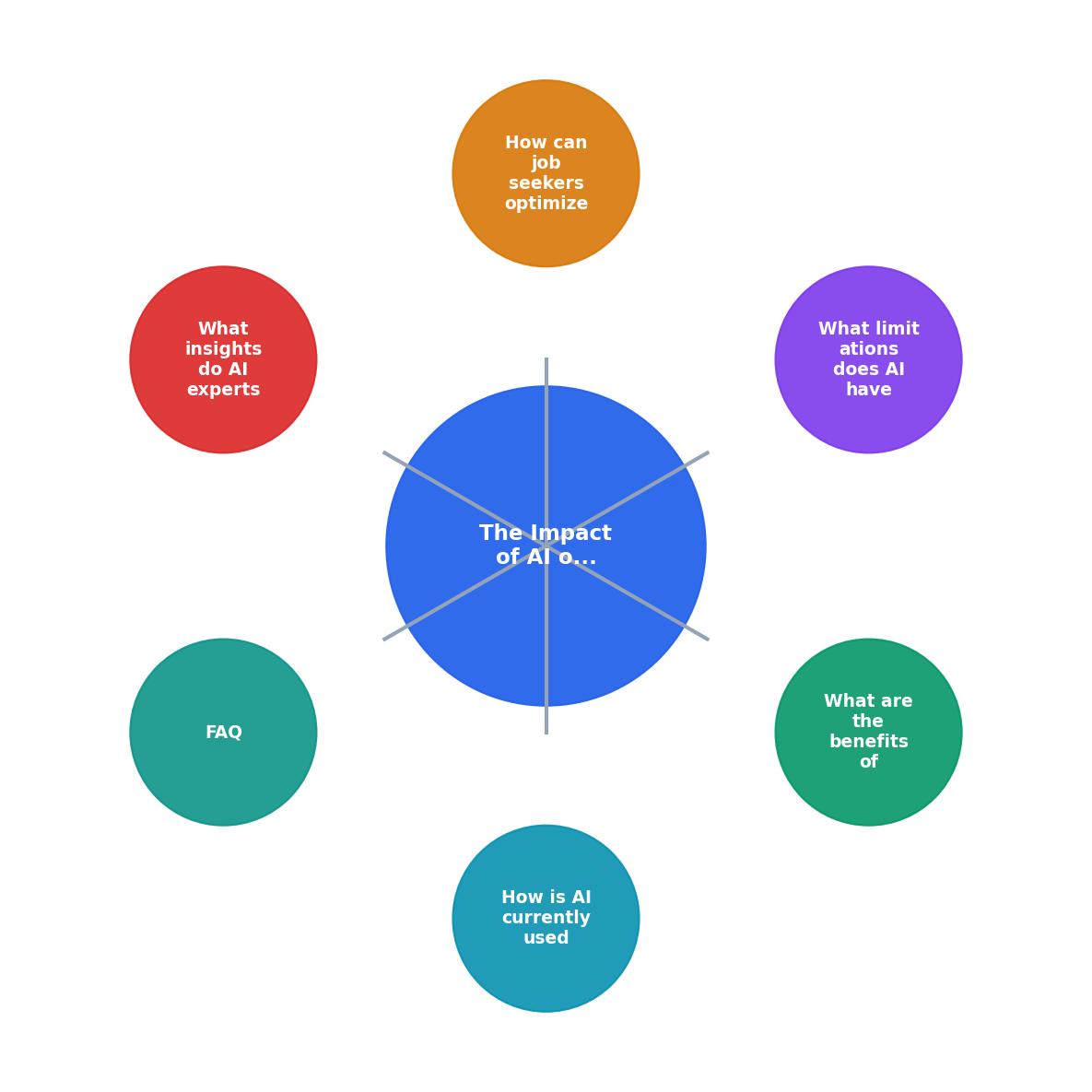
The typical flow:
- Parse, The ATS extracts text from your PDF or uploaded file, converting it into structured data (name, email, phone, work history, skills, education).
- Match, The system compares your extracted data against the job requirements using keyword matching, semantic analysis, or machine learning scoring.
- Rank, Candidates are scored and sorted. Typically, the top 10-20 resumes are flagged for human review.
- Filter, Additional rules or thresholds (years of experience, required certifications) may automatically reject candidates or boost others.
- Review, A recruiter pulls the ranked list and reads the top candidates manually.
Key takeaway: Your resume isn't written for the hiring manager first, it's written for the AI system first, and the human recruiter second.
Keyword Optimization: The Core Strategy
The single most effective tactic is matching the language of the job description. When a job posting says "project management," use that phrase. When it lists "Python," don't replace it with "coding" or bury it in a bullet point.
Relevant keywords tell the ATS your resume is aligned with the role. Missing keywords signal irrelevance, even if you have the skill under a different name.
Where to Place Keywords
- Title and summary, Lead with your target role and top 3-5 relevant skills or outcomes.
- Job titles, Include relevant keywords in how you describe past roles. If you were a "Marketing Coordinator" but did project management, highlight that clearly.
- Bullet points, Use the job description's exact terminology in achievement statements. Example: instead of "improved efficiency," match the posting: "reduced report processing time by 35% through workflow automation."
- Skills section, List hard skills that appear in the job posting. Mirror the exact phrasing when possible.
Identify Keywords from the Job Description
Treat every job posting as a source document. Extract:
- Hard skills (programming languages, tools, certifications)
- Soft skills (leadership, communication, problem-solving)
- Industry or domain terms (machine learning, clinical trial, supply chain)
- Specific responsibilities or outcomes mentioned multiple times
- Required vs. preferred qualifications
Formatting and Structure for AI
AI systems struggle with unconventional layouts. If you use columns, graphics, or complex formatting, the parser may misread or skip sections entirely.
Stick to a simple, linear structure:
- Clean headings, Use standard section headers: Experience, Education, Skills, Projects, Certifications.
- Reverse chronological order, Most recent first. Recruiters (and ATS systems) expect this.
- Standard file format, PDF is generally safer than Word (.docx), but check the job posting. Some ATS prefer certain formats.
- No images, charts, or icons, These confuse parsers. Text only.
- Single column layout, Two or three columns often get mangled by ATS software.
- Clear contact info, Phone, email, LinkedIn at the top, easy to find.
- Consistent date formatting, Use Month Year (e.g., "Jan 2024" not "1/2024" or "January 2024").

What AI Gets Wrong (And Why Human Review Still Matters)
AI screening has real blindspots. Here are the biggest ones:
Career transitions. If you're switching fields, your previous job titles and skills may not match the new role's keywords. An ATS might flag you as unqualified even if you're perfect for the role. This is where human reviewers save the day, they can read your cover letter or spot the connection you drew. But you have to get past the first filter to reach them.
Underrepresented skills. If you have relevant experience from freelancing, volunteer work, or open-source projects, the ATS may not weight these heavily because they don't fit the "standard" resume template. You need to present them formally: include them in a Projects or Volunteer section with dates and clear descriptions.
Soft skills and culture fit. AI can identify that you know Python, but it can't tell if you're collaborative, creative, or good in a crisis. These qualities matter enormously to hiring teams, but they're invisible to algorithms.
Overqualification or timeline concerns. An AI system might red-flag you as a flight risk if you're applying for a role below your experience level, or it might assume you'll leave quickly. A human would understand the context (you're prioritizing flexibility, location, or learning).
"Data security is an important topic when it comes to working with AI tools, and that holds true when working on your resume.">, AI uses for resume writing
The bottom line: AI screens for fit on a shallow level. Humans make the real hire decision based on deeper judgment. Your job is to clear the AI gate so a human can assess your real value.
Expert Insights: What Recruiters and AI Specialists Recommend
Recruiting teams increasingly view AI as a triage tool, not a final judge. Most acknowledge the limitations and use human judgment to override or sanity-check rankings, especially for close calls or candidate profiles that don't fit the standard mold.
HR professionals emphasize that while AI speeds up screening, it can miss great candidates. For this reason, many recruiters now:
- Manually review resumes from referrals or underrepresented sources, bypassing the ATS entirely
- Lower ATS thresholds and do broader human review to catch edge cases
- Use AI as a first pass, then have senior team members evaluate the final pool
Building an AI-Ready Resume: Practical Steps
Here's a step-by-step approach:
- Extract keywords from the job posting. Create a list of 10-15 core terms.
- Audit your current resume. Do you use these terms naturally? Highlight gaps.
- Revise bullet points to incorporate missing keywords while keeping accomplishments clear.
- Check formatting. Clean layout, standard sections, no graphics.
- Test with an ATS parser tool (many online tools let you upload and see parsed output).
- Read your revised resume aloud. Does it still sound like you? If not, rebalance.
- Tailor for each job application. Different roles need different keyword emphasis.
AI-Friendly Resume Checklist
Your progress is saved automatically in your browser.
FAQ
Frequently Asked Questions
Recruiters still make the final call, but AI now decides who gets in the room. Understanding how these systems work isn't about gaming the algorithm, it's about ensuring your real qualifications are actually visible to the people evaluating them. By optimizing for AI, you're removing a technical barrier, not compromising your integrity. The resume that ranks highest with an ATS is usually the same one that impresses a human: clear, relevant, and focused on what matters to the role.
Additional Resources
- AI uses for resume writing - An effective use of AI tools is to edit your resume bullet points. Consider asking the tool to analyze factors such as redundancy between bullet points, or ...
- Why Using AI To Write Your Resume Is A Big Mistake - Using AI to write your resume can backfire when it's becomes generic or invents accomplishments. Here's what AI misses and how to write ...
- 5 Things You Need to Know When AI is Writing Your Resume - Sometimes an AI-generated resume can exaggerate your skills and experience, making you sound more qualified than you really are. Don't use the ...