
Resume writing today is stuck between two worlds: the generic template that gets sent to every job, and the grueling manual tailoring that takes hours for a single application. AI is already starting to bridge that gap, and by 2026, the entire process could look radically different. From automatically matching keywords to job descriptions, to personalizing your achievements in real time, AI tools are shifting resume writing from a painful, one-size-fits-all chore into a data-driven, job-specific advantage. The question is no longer whether AI will reshape resume writing, it's happening now, but how you adapt to stay competitive.
Photo by Pavel Danilyuk from Pexels
TL;DR:- AI is already automating keyword matching, personalization, and ATS optimization, saving hours per application.
- By 2026, expect AI to generate job-specific bullet points, detect hidden skills, and predict which versions of your resume perform best.
- Career changers and job seekers will benefit most, as AI translates transferable skills and reframes experience for new roles.
- The human element, storytelling, strategy, and strategic self-presentation, remains essential; AI handles the tactical layer.
What Role Does AI Currently Play in Resume Writing?
Today, AI isn't replacing resume writers; it's automating the tedious parts. Tools like Rezi, Jobscan, and Resume Hedgehog scan your resume against a job description and flag missing keywords, content gaps, and formatting issues that ATS systems catch. These tools score your resume for ATS compatibility and suggest rewording to improve your match percentage.
The current landscape includes:
- Keyword scanners: Match your resume against job descriptions and identify gaps (Jobscan, Rezi).
- Content generators: Suggest or rewrite bullet points based on your job history (ChatGPT, Claude, specialized resume tools).
- Formatting optimizers: Ensure your resume passes ATS parsing without losing critical information.
- Plagiarism and duplicate detection: Flag if your resume language matches thousands of others verbatim.
The statistic is clear: AI-assisted resume writing is mainstream now. But these tools are still fragmented, you jump between sites, copy-paste sections, and manually apply suggestions. By 2026, this workflow will consolidate and deepen.

How Will AI Personalize Resume Content?
Personalization is where AI-powered resume writing shifts from helpful to transformative. Instead of writing one resume and submitting it everywhere, imagine uploading your resume once, then pasting a job description, and within seconds receiving a fully tailored version with rewritten bullet points, reordered sections, and optimized keywords, all specific to that role.
Here's how this works in practice:
- Skill extraction: AI reads your resume and job history, identifying your skills, metrics, and accomplishments.
- Job description parsing: AI analyzes the job posting, pulling out required skills, soft skills, industry keywords, and implicit values (e.g., "fast-paced environment" means they want someone who handles rapid context switching).
- Matching and reframing: AI rewrites your bullet points to highlight the skills that matter most for that specific job. A project manager's "Led cross-functional team on product launch" becomes "Coordinated engineering, design, and marketing teams across 18-week product cycle, shipping on schedule and under budget."
- Dynamic prioritization: Reorders your experience section to put the most relevant roles first, even if they aren't chronologically most recent.
The real power here is speed and consistency. Manual tailoring is error-prone and exhausting. AI ensures every application gets your best effort.
How Can AI Improve ATS Compatibility?
ATS systems are the gatekeepers, they filter resumes before human eyes see them. Many qualified candidates never get past the ATS because their resume format confuses the parser, or because they're missing keywords the system screens for.

AI improves ATS compatibility in several ways:
- Keyword density analysis: Tools like Rezi and Jobscan measure how often critical keywords appear in your resume versus the job description. They flag missing terms and suggest natural placement.
- Format detection: AI scans your resume for common ATS blockers, graphics, tables, unusual fonts, or complex layouts, and alerts you to reformat before submitting.
- Synonym mapping: Modern AI understands that "Agile" and "Scrum" are related terms. It ensures you're using the language the specific job posting uses, not a close synonym.
- Meta-information optimization: AI checks that your contact info is in standard format, that dates are consistent, and that section headers match what ATS systems expect.
Here's a concrete example: You apply for a "Senior Product Manager" role at a SaaS company. The job description mentions "metrics-driven," "B2B," "feature prioritization," and "cross-functional leadership" eight times. Your resume says "led teams," "managed products," and "analytics" but never uses the exact phrases the job posting emphasizes. An AI tool flags this gap, and you add a few instances of "metrics-driven prioritization" and "B2B product strategy" to your experience bullets. Same accomplishments, better language match, and suddenly your resume scores 85% instead of 62% in the ATS.
What Future Developments Are Expected?
By 2026, the trajectory is clear. Expect AI resume tools to include:
- Predictive performance scoring: Instead of just measuring ATS compatibility, AI will predict your interview callback rate based on historical data from similar candidates in similar roles at similar companies. "This resume version will likely generate 3-4 callbacks; this version will generate 6-7."
- Multi-version testing: Upload one resume, and the tool generates five variations, different bullet point emphases, different keyword density, different section ordering, and tracks which version performs best across your applications.
- Hidden skill detection: AI will surface skills you haven't explicitly mentioned. You wrote "managed a $2M budget" and "reduced onboarding time by 40%", AI recognizes you have fiscal management, process optimization, and systems thinking skills, then suggests adding those terms to your professional summary.
- Role-specific storytelling: Instead of generic bullet points, AI will generate narratives tailored to what each company values. For a scrappy startup, it emphasizes speed and autonomy; for an enterprise, it emphasizes rigor and collaboration.
- Video resume integration: AI will begin analyzing video resumes, scoring tone, eye contact, pacing, and message clarity, similar to how it optimizes written resumes today.
"Can my AI resume builder produce a bullet point that could only be mine, or one that could belong to anyone with my job title?">, 9 Best AI Resume Builders in 2026: A Resume Expert's Honest Breakdown
This quote cuts to the heart of a real tension: AI-optimized resumes run the risk of sounding generic. By 2026, the best tools will solve this by personalizing not just to the job, but to your unique voice and context, blending AI efficiency with authentic individuality.

How Will These Changes Impact Career Changers?
Career changers face a unique resume problem: your experience is relevant, but it doesn't look relevant at first glance. You spent five years as a teacher; now you're applying for instructional design roles. Your resume reads "teaching," but the job posting screams "curriculum design," "eLearning," "learner personas." Without help, your resume gets rejected by ATS systems despite your perfect fit.
AI solves this by translating. A career change-focused resume tool will:
- Map transferable skills: Recognize that "classroom management" = "stakeholder coordination," that "curriculum development" = "project planning and execution," that "student feedback analysis" = "data-driven iteration."
- Reframe your story: Instead of leading with your teacher title, lead with your design and strategy achievements, which happen to come from education.
- Surface hidden relevance: You led a school-wide literacy initiative and increased student reading proficiency by 35%. AI recognizes this as evidence of change management, scalability, and metrics-driven thinking, highly relevant for instructional design.
- Generate role-specific bullet points: For an instructional designer role, your "led professional development workshops for 150 teachers" becomes "Designed and facilitated scalable learning programs for 150 stakeholders, improving knowledge retention by measuring post-training assessment scores."
The other beneficiary: returners. Taking a career break for caregiving, health, or other reasons? AI can help explain the gap without stigma, reactivate your skills, and reconnect you to current industry terminology.
The AI-Enhanced Resume Process
To understand how this all fits together, here's the end-to-end workflow we expect by 2026:
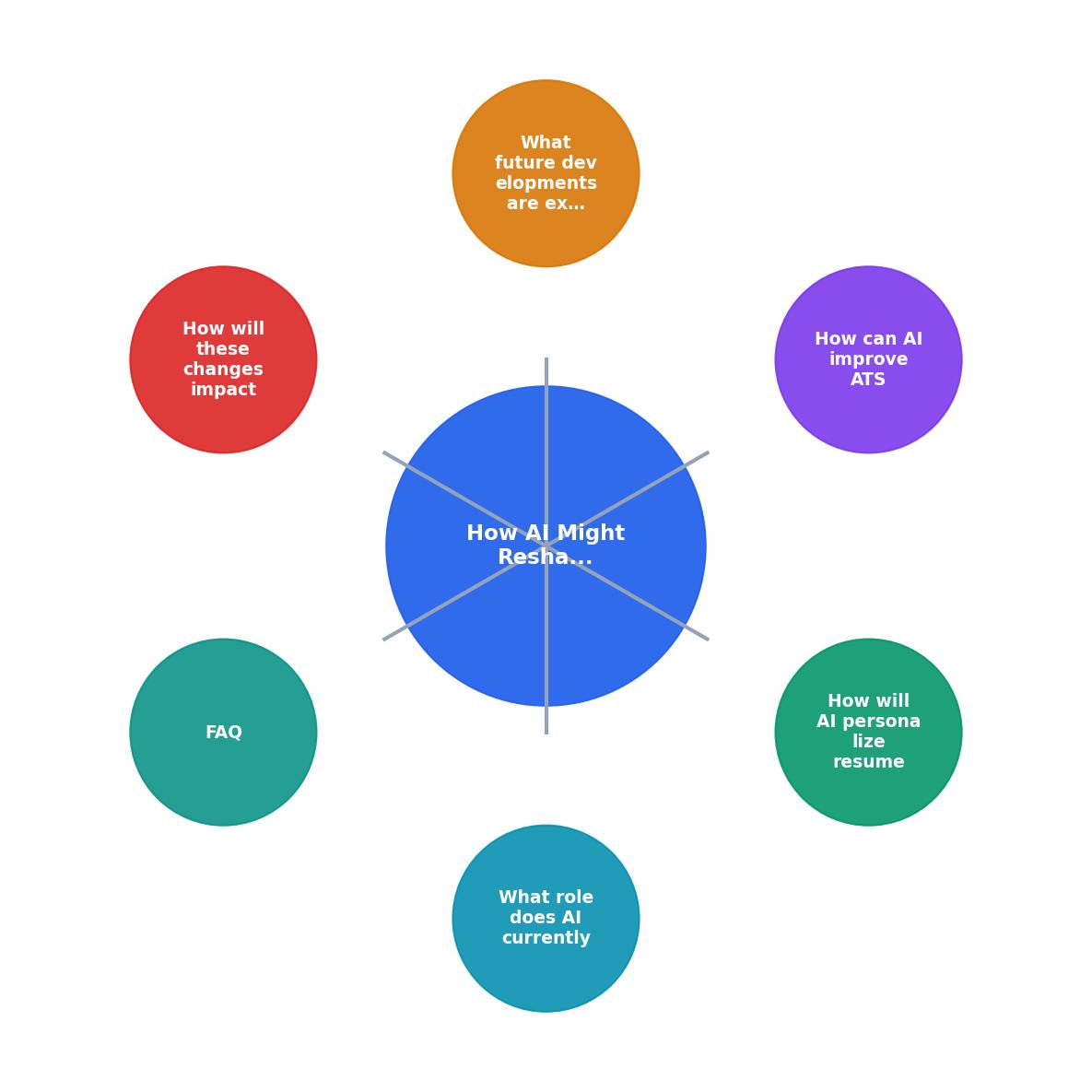
The diagram shows the flow: Upload resume → Paste job description → AI analyzes both → Generates optimized version → Predicts performance → Apply with confidence.
Interactive Resume Optimization Dashboard
To visualize how AI transforms your resume across multiple dimensions, here's an interactive breakdown of a typical optimization:
This dashboard shows what a typical resume looks like after AI optimization. The before-and-after metrics reveal the magnitude of the shift: from a resume that barely passes ATS screening to one that matches the job description across multiple dimensions. By 2026, this kind of real-time feedback will be standard, not a feature.
Step-by-Step Guide to Using AI for Resume Writing
Whether you're actively job hunting, changing careers, or preparing for opportunities ahead, here's how to leverage AI tools effectively:
AI Resume Optimization Workflow
Your progress is saved automatically in your browser.
The key insight: AI isn't a one-and-done tool. It's iterative. Each application teaches you which narratives resonate, which keywords matter, which version of your story converts best.
FAQ
Frequently Asked Questions
The Human Element Still Matters
Here's the truth: AI is incredible at optimization, but it's not a replacement for strategic thinking. An AI-optimized generic resume still loses to a thoughtfully positioned resume, even if the optimized one scores higher on keyword metrics.
By 2026, the most successful job seekers will view AI as a collaborator. You set the strategy, which achievements to emphasize, which story to lead with, which parts of your background matter most for your target role. AI handles the execution: ensuring every word lands, every keyword is present, every format passes ATS screening.
The biggest competitive edge won't be using AI, it'll be using it strategically. Combining real accomplishments, authentic positioning, and AI-driven optimization. That's the future of resume writing.
Additional Resources
- 9 Best AI Resume Builders in 2026 - The majority of AI resume builders started as template tools. The AI features feel added on: an "AI Writer" can rewrite sections, and there's ...
- AI Will Reshape More Jobs Than It Replaces - Over the next two to three years, 50% to 55% of jobs in the US will be reshaped by AI. For many employees, this will mean that they retain ...
- ChatGPT for Resumes 2026: What It Can and Cannot Do - Learn exactly what it does well, where it falls short, and how to combine AI writing with structured resume optimization to actually land more interviews.
