
You spent hours rewriting your resume for a new career direction. You matched keywords, reformatted sections, and tailored every bullet point to the job description. Then you hit the application portal and saw that optional cover letter upload field. You skipped it. That single decision may have cost you the interview.
Photo by Anna Shvets from Pexels
TL;DR:- A cover letter gives you space to explain career transitions, employment gaps, and transferable skills that a resume alone cannot convey.
- Pairing a targeted cover letter with an ATS-optimized resume increases your chances of reaching a human reviewer.
- Effective cover letters mirror the job description's language, tell a brief story about your fit, and stay under one page.
Why Cover Letters Still Matter
A resume is a structured list. It shows what you did and when you did it. A cover letter answers the question a resume never can: why are you here?
For anyone switching careers or returning after a break, that "why" is the most important part of the application. A hiring manager scanning a resume from a former teacher applying for an instructional design role sees a mismatch at first glance. A cover letter bridges that gap in thirty seconds.
That number is not trivial. When more than four out of five hiring managers actually read the letter you attach, skipping it means leaving your strongest argument on the table.
Cover letters also serve a practical filtering purpose. Some Applicant Tracking Systems parse cover letter text alongside resume content. Keywords that appear in your letter but not your resume can still register as matches. This gives you a second surface area for the terminology of your new field.
How a Cover Letter Complements a Tailored Resume

Think of your resume and cover letter as two halves of one argument. The resume provides evidence. The cover letter provides narrative.
Here is what each document does best:
- Resume: Lists roles, dates, metrics, skills, and certifications in a scannable format optimized for ATS parsing.
- Cover letter: Explains motivation, connects dots between seemingly unrelated experiences, and addresses potential concerns (gaps, industry switches, relocation).
The combination works because each document compensates for the other's weakness. Resumes lack context. Cover letters lack structure. Together, they present a complete candidate.
Tips for Crafting Effective Cover Letters
The following visual breaks down the process of building a cover letter that works alongside your ATS-friendly resume.
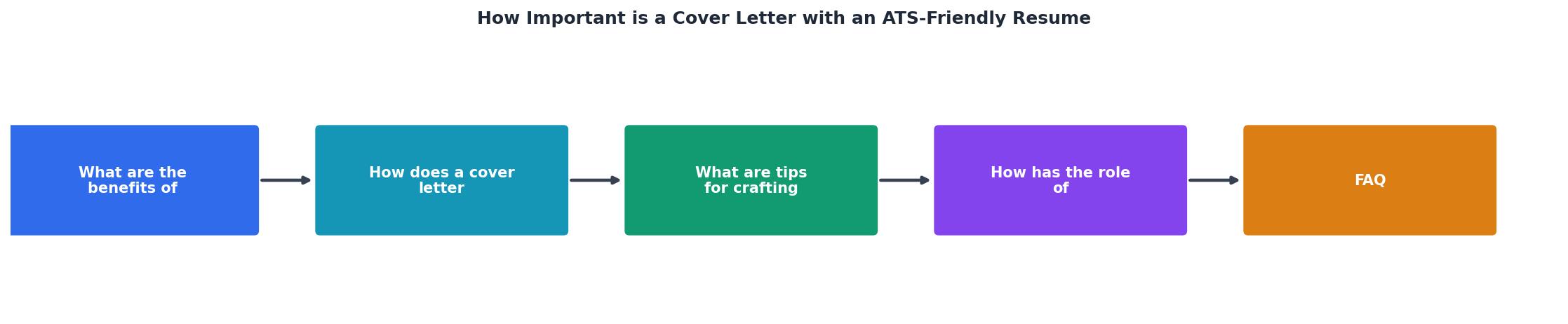
Here is what each step involves:
- Read the job description twice. The first pass is for understanding. The second is for extracting keywords, required qualifications, and the tone of the company.
- Open with a specific hook. Name the company, the role, and one reason you are excited. Generic openings get generic results.
- Connect your past to their future. Pick two or three transferable skills and show how they apply to the new role with brief, concrete examples.
- Mirror their language. If the posting says "cross-functional collaboration," use that phrase. ATS systems and human readers both respond to alignment.
- Close with a clear ask. State that you welcome the opportunity to discuss your fit and provide your availability or preferred contact method.
"Here's what matters:>
• Use keywords from the job description to pass the ATS scan>, How to Write a Cover Letter That Passes ATS Scan
• Keep formatting clean."
That statistic alone should settle the "is it worth the effort" debate. When a significant portion of recruiters actively penalize missing cover letters, the ten minutes it takes to write one is a high-return investment.
Cover Letters in the Digital Age

The format has changed. Nobody mails a physical letter anymore. But the function remains identical: give the reader a reason to care about your application before they open the resume.
Modern cover letters live in three places:
- Upload fields in ATS portals (PDF or DOCX, one page max)
- Email bodies when applying directly to a hiring manager
- LinkedIn messages when reaching out to recruiters or connections
The trend toward skills-based hiring has actually increased the value of cover letters for career changers. Companies like IBM, Google, and Accenture have publicly dropped degree requirements for many roles. When formal credentials matter less, your ability to articulate transferable skills matters more. The cover letter is where that articulation happens.
Here is a quick look at how cover letter expectations differ across application channels:
| ATS Portal Upload | Direct Email | LinkedIn Outreach |
|---|---|---|
| Full one-page letter | 3-4 concise paragraphs | 2-3 sentences + link |
| PDF or DOCX format | Plain text in email body | Message format |
| Formal tone | Professional but warm | Conversational |
| Include all keywords | Focus on top 2-3 skills | Highlight one hook |
| Address to "Hiring Manager" | Address by name if known | Address by name always |
Tools like Resume Hedgehog help you align your resume with a specific job description so the keywords are already in place. Your cover letter then builds on that foundation by adding the human story behind the data points.
The following card shows how a well-paired resume and cover letter stack up against a resume-only application for career changers:
Career Changer Application Impact
Cover Letter Template for Career Changers
Cover Letter Writing Checklist
Your progress is saved automatically in your browser.
Here is a simple structure you can follow:
Paragraph 1 (3 sentences): State the role, where you found it, and one sentence about why this company interests you.
Paragraph 2 (4-5 sentences): Describe your most relevant transferable skill with a concrete example. Quantify the result if possible. Connect it directly to a requirement from the job posting.
Paragraph 3 (3-4 sentences): Address your transition. Name your previous field, acknowledge the shift, and frame it as a strength. Example: "My background in classroom instruction gave me five years of experience designing learning experiences, assessing outcomes, and adapting content for diverse audiences."
Paragraph 4 (2 sentences): Thank the reader. State your availability for a conversation.
FAQ
Frequently Asked Questions
What is the one thing you always struggle with when writing cover letters for a new field? Share your experience below.
Additional Resources
- How to Write an ATS-Friendly Cover Letter - A cover letter must be short, if possible one page with three to four paragraphs, and must be tailored to the specific role applied to.
- How to Make Your Resume and Cover Letter ATS-Friendly - Your ATS-friendly resume should prioritize clarity over style. Think of ATS-friendliness as good communication: clear, structured, and targeted.
- Resumes and Cover Letters - A cover letter is a chance to tell the employer why they should hire you over another candidate. It is important to include a cover letter even if it is not ...
