
Two out of three professionals have recently thought about switching careers, yet most of them still send resumes that scream their old job title. The gap between wanting a new career and actually landing one often comes down to a single document. The good news is that the tools, strategies, and mindset for bridging that gap are evolving fast, and career changers who adapt will have a serious edge in the years ahead.
Photo by Mikhail Nilov from Pexels
TL;DR:- Career changers who focus on transferable skills, continuous learning, and strategic resume reframing get hired faster than those who simply list old job duties.
- AI tools can now scan your experience and map it to new industries, identifying skill overlaps you might miss on your own.
- The future belongs to adaptable professionals who treat their resume as a living, targeted document rather than a static career history.
The career change wave is real
Switching careers is no longer a rare, dramatic leap. It has become a normal part of professional life. Layoffs, automation, burnout, and shifting personal priorities push people toward new fields every year.
"According to iHire's 2020 Talent Retention Report, 66 percent of survey respondents have recently considered changing careers.">, How to Write a Career Change Resume
That number has only grown since 2020. Remote work opened doors to industries that were previously location-locked. The rise of micro-credentials and bootcamps made it possible to gain relevant skills in months, not years. And hiring managers, especially in tech, healthcare, and sustainability, have started valuing diverse backgrounds over cookie-cutter career paths.
But here is the catch: your resume still has to do the talking. A recruiter spending six seconds on your document does not care about your personal growth journey. They care about whether you can do this job. That means career changers need a fundamentally different approach to resume writing than someone climbing a traditional ladder.
Skills employers actually want

The skills that matter most for career changers fall into two buckets: adaptable skills that transfer across industries, and domain-specific skills you can learn quickly.
Here are the adaptable skills employers consistently rank highest:
- Project management - coordinating people, timelines, and budgets works in marketing, construction, healthcare, and software development alike.
- Data analysis - reading spreadsheets, spotting trends, and making data-driven decisions. Teachers do this with student performance data. Retail managers do it with inventory. It translates everywhere.
- Communication - writing clear emails, presenting to stakeholders, and explaining complex ideas simply. This is the single most transferable skill in existence.
- Problem-solving - every job has fires to put out. Showing you can diagnose issues and implement fixes matters more than the specific domain.
- Technical literacy - comfort with digital tools, SaaS platforms, and learning new software quickly.
Lifelong learning changes the game

A decade ago, a career change meant going back to school for two to four years. That is no longer the only path. Lifelong learning through online platforms, professional certifications, and industry-specific bootcamps has compressed the timeline dramatically.
Platforms like Coursera, LinkedIn Learning, and Google Career Certificates offer programs that hiring managers recognize. A teacher transitioning to UX design can complete the Google UX Design Certificate in under six months. A military veteran moving into project management can earn a CompTIA Project+ or CAPM certification in a similar timeframe.
What matters on your resume is not just listing the certificate. It is showing how you applied what you learned:
- Completed a capstone project redesigning a nonprofit's donation flow (UX design)
- Built a personal portfolio site using React and deployed it on Vercel (web development)
- Analyzed a public dataset and published findings on GitHub (data science)
The resume implication is clear: dedicate a section to relevant certifications and projects, placed above your work history if your previous job titles do not match the target role. This is called a functional or combination resume format, and it is the career changer's best friend.
How AI identifies transferable skills
The hardest part of a career change is often not learning new skills. It is recognizing which skills you already have that apply to the new field. This is where AI-powered resume tools have become genuinely useful.
Here is how the process works:
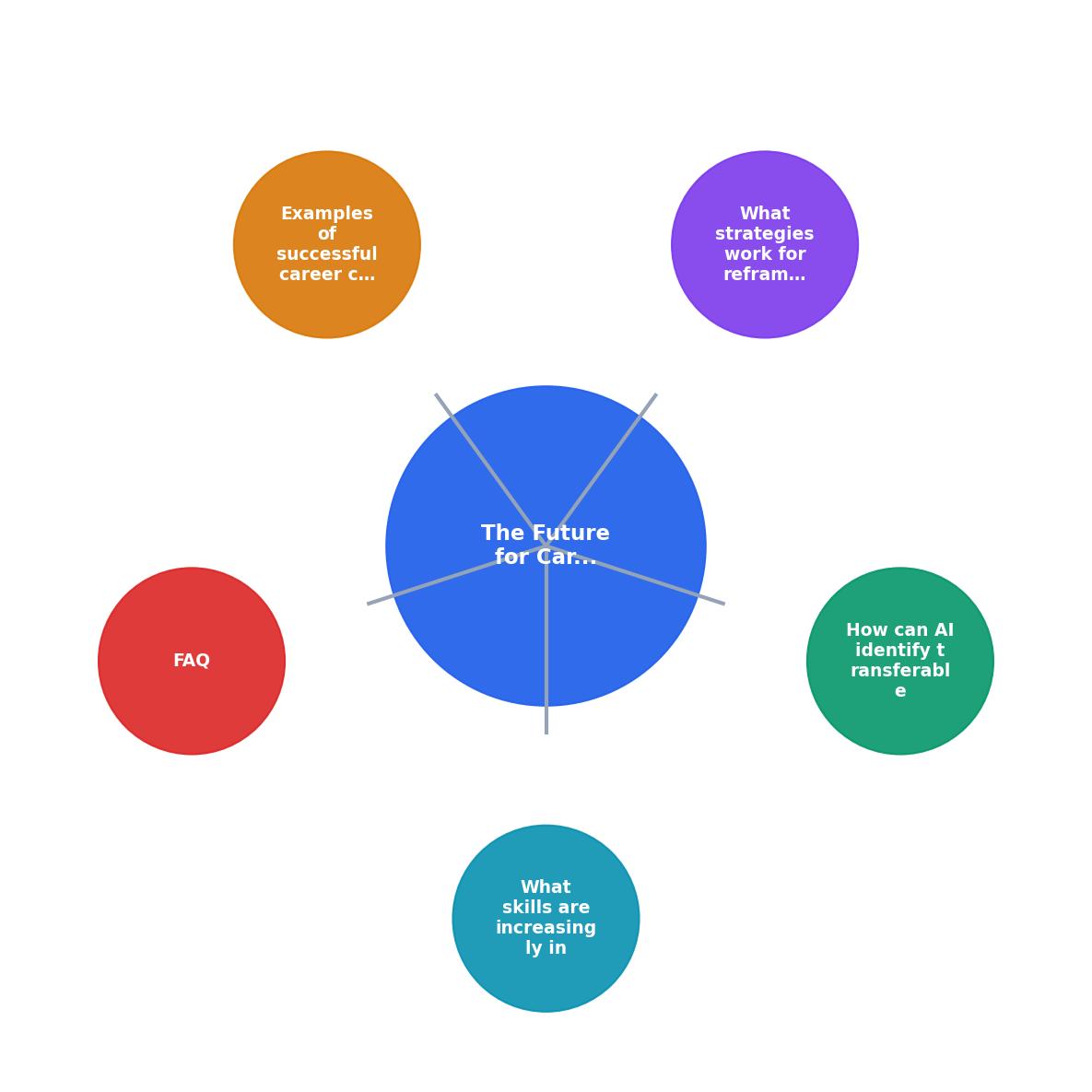
The steps break down like this:
- Upload resume - feed your current resume into an AI tool.
- Paste job description - provide the target role's posting.
- AI skill mapping - the tool compares your experience against the job requirements, identifying overlaps and gaps.
- Keyword optimization - it suggests industry-specific terminology to replace generic language.
- Tailored output - you get a reframed resume that speaks the language of your new field.
This is not about fabricating experience. It is about translation. A restaurant manager who "managed a team of 15, controlled a $500K annual budget, and reduced food waste by 20%" has project management, budget oversight, and process optimization experience. An AI tool catches those connections and frames them in language a tech recruiter or operations hiring manager understands.
Strategies for reframing your resume

Reframing is not lying. It is choosing which truths to emphasize. Here are the specific techniques that work:
Lead with a targeted summary
Replace your old objective statement ("Experienced teacher seeking new opportunities") with a professional summary that positions you for the target role. Example:
Dedicated educator with 10 years of classroom experience seeking a new challenge.
Instead: "Operations-focused professional with 10 years of experience managing teams of 30+, designing training programs, and analyzing performance data to improve outcomes. Seeking to apply these skills in a Learning & Development Specialist role."
Use the job description as your blueprint
Every job posting tells you exactly what to put on your resume. Pull the top 8-10 requirements from the posting and map your experience to each one. If the posting says "experience with stakeholder management," and you ran parent-teacher conferences for 200 families, that counts.
Rewrite bullet points with the STAR method
- Situation: Brief context
- Task: What you were responsible for
- Action: What you specifically did
- Result: Measurable outcome
Group experience by skill, not by job
A functional resume groups your bullet points under skill headings (Project Management, Data Analysis, Team Leadership) rather than under job titles. This forces the reader to see your capabilities first and your job titles second.
The following interactive card shows how a single career changer's experience can be reframed across different target industries:
Resume Reframing Example
Real career change stories
Abstract advice only goes so far. Here are three career transitions that actually worked, and what made the resume click:
Teacher to UX Designer. Sarah spent 8 years teaching high school English. Her resume highlighted curriculum design (translating complex material for different audiences), user research (understanding student needs through assessments and feedback), and data-driven iteration (adjusting lesson plans based on test results). She completed the Google UX Design Certificate, added two portfolio projects, and landed a junior UX role at a mid-size SaaS company within four months.
Military Officer to Operations Manager. James served 12 years in the Army, leading logistics operations for units of 200+. His resume translated military jargon into corporate language: "supply chain management" instead of "logistics operations," "team leadership across distributed locations" instead of "command of forward operating bases." He used a combination resume format that led with skills and placed military titles in a secondary section. He received three offers within six weeks.
Retail Manager to Data Analyst. Priya managed a chain of retail stores for five years. She had been doing data analysis all along: forecasting inventory, analyzing sales trends, optimizing staff schedules based on foot traffic patterns. She completed a data analytics bootcamp, rebuilt her resume around analytical accomplishments with specific metrics (reduced overstock by 22%, improved scheduling efficiency by 18%), and transitioned into a data analyst role at a logistics company.
The common thread: none of them invented experience. They reframed what they had already done using the vocabulary of their target field.
| Traditional Resume Approach | Career Change Resume Approach |
|---|---|
| Lists job titles chronologically | Groups experience by transferable skill |
| Uses old industry jargon | Adopts target industry terminology |
| Buries relevant skills in job descriptions | Leads with a targeted professional summary |
| One generic resume for all applications | Tailored resume for each target role |
| Focuses on duties performed | Focuses on measurable outcomes achieved |
Your career change resume checklist
Career Change Resume Reframing Checklist
Your progress is saved automatically in your browser.
FAQ
Frequently Asked Questions
What is the one skill from your current career that you think would surprise a hiring manager in your target field? That might be exactly the thing that gets you the interview.
Additional Resources
- How to Write a Career Change Resume - Template - Wharton - When you're changing careers, your resume needs to emphasize relevant skills. Learn how to write a career change resume & download our example template.
- Making a career change? | Adrienne Tom - Here's what really works when writing a career change resume 1. Use a hybrid or functional format—highlight your skills first, then your work ...
- 8 Career Change Resume Examples That Land Interviews in ... - Discover 8 powerful career change resume examples to reframe your skills. See before/afters, get ATS tips, and learn how to land your next ...
