
Sending the same generic cover letter to every job posting is the fastest way to get ignored. Hiring managers spend seconds scanning your application, and a letter that reads like it could belong to anyone tells them you did not bother reading the job description. This guide walks you through a repeatable process for writing a cover letter that mirrors the exact role you want, using concrete steps you can follow today.
TL;DR:- Pull the top 5-7 requirements straight from the job posting and address each one in your cover letter.
- Open with a specific achievement that proves you can do the job, not a generic "I'm excited to apply."
- Use the same language the employer uses so ATS filters and human readers both recognize the match.
- Pair your tailored cover letter with a tailored resume for maximum impact.
Why a Matched Cover Letter Matters
A cover letter that mirrors the job posting does two things at once. It passes automated keyword filters, and it signals to the recruiter that you actually read what they wrote. That second part is rarer than you think.
Most applicants copy-paste a single letter across dozens of openings. The result: a vague document that mentions "strong communication skills" and "team player" without connecting those phrases to anything the employer asked for. When a hiring manager reads a letter that directly references their posted requirements, it stands out immediately.
The goal is not to rewrite your entire career story for every application. It is to create a reliable system where you swap in the right details for each role in 15-20 minutes, not two hours.
Common Cover Letter Mistakes

Before building the step-by-step process, here are the mistakes that sink most cover letters:
- Generic openers. "Dear Hiring Manager, I am writing to express my interest in the position" tells the reader nothing. It wastes the most valuable real estate in the letter.
- Listing duties instead of results. Saying "I managed a team" is a job description, not evidence. Saying "I managed a 12-person logistics team that cut delivery times by 18%" is proof.
- Ignoring the job posting keywords. If the posting says "Salesforce administration" and your letter says "CRM management," the ATS may not connect the dots. Use their exact terms.
- Writing a wall of text. Three to four short paragraphs is the sweet spot. Anything longer gets skimmed or skipped.
- Repeating the resume word-for-word. The cover letter should complement your resume, not duplicate it. Pick two or three highlights and expand on the story behind them.
Step-by-Step: Match Your Letter to the Job
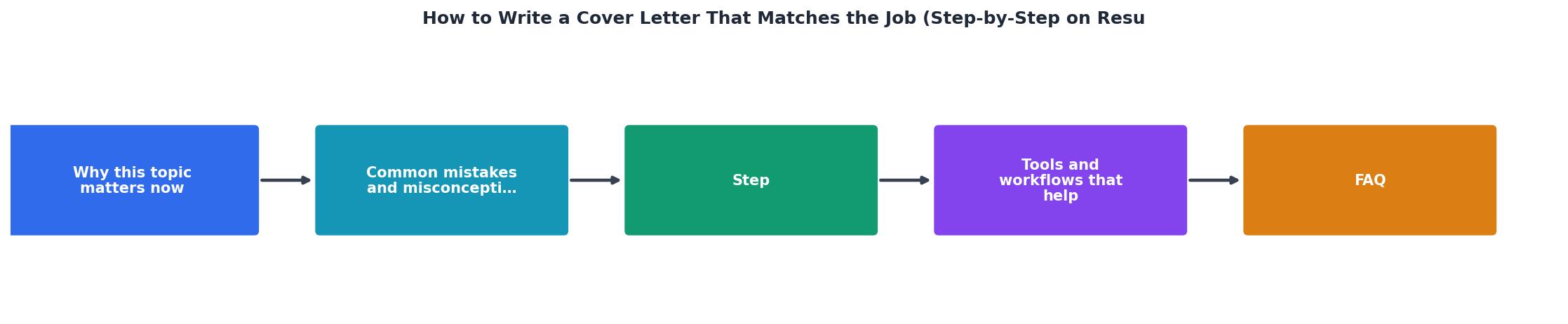
Follow these steps in order. Each one builds on the previous.
Step 1: Dissect the Job Posting
Open the job description and highlight every requirement, skill, and qualification. Group them into three categories:
- Must-haves (listed under "required qualifications")
- Nice-to-haves (listed under "preferred" or "bonus")
- Cultural signals (phrases like "fast-paced environment," "cross-functional collaboration," "data-driven decisions")
Step 2: Match Your Evidence
For each of those 5-7 items, write one sentence that proves you have done it before. Use numbers whenever possible: revenue generated, percentage improved, team size managed, deadlines met.
"I have negotiated contracts worth $9.5m, improved delivery efficiencies by 12%, redesigned warehouse packing flows, overseen staff disputes, and driven profitability to industry-leading levels.">, [350+ Free Cover Letters Examples by Job [Full Guides] · Resume.io](https://resume.io/cover-letter-examples)
That kind of specificity is what separates a matched cover letter from a generic one. You do not need $9.5 million in contracts. You need concrete details from your own experience that map directly to what the employer asked for.
Step 3: Write the Opening Paragraph
Start with your strongest match. If the job posting leads with "5+ years of project management experience" and you have seven years, open with that. Example:
"In seven years of managing cross-functional product launches at Acme Corp, I delivered 14 projects on time and under budget. Your Senior Project Manager role at [Company] calls for exactly this kind of track record, and I want to bring that same discipline to your team."
Two sentences. Specific. Directly tied to the posting.
Step 4: Build the Body

Use one or two short paragraphs to cover the remaining matches. Each paragraph should follow this pattern:
- Claim (what you did)
- Context (where and when)
- Result (measurable outcome)
Step 5: Close with a Clear Ask
End by restating your interest and suggesting a next step. Keep it simple: "I would welcome the chance to discuss how my experience with [specific skill] aligns with your goals for [specific project or team]. I am available for a conversation at your convenience."
No gimmicks. No "I look forward to hearing from you at your earliest convenience" filler.
Tools and Workflows That Help

A matched cover letter works best when paired with a matched resume. If your resume still lists every skill you have ever learned instead of the ones this employer cares about, the cover letter cannot carry the application alone.
Here is a practical workflow:
- Tailor the resume first. Upload your resume and paste the job description into Resume Hedgehog to get an ATS-optimized, job-matched version. This takes minutes, not hours.
- Use the tailored resume as your source. The keywords and achievements Resume Hedgehog surfaces for the resume become the raw material for your cover letter.
- Write the cover letter using the steps above. You already have the matched keywords and prioritized achievements. Now frame them in letter format.
- Review both documents side by side. Make sure the cover letter adds context and story, not repetition.
| Generic Approach | Matched Approach |
|---|---|
| Same letter for every job | Customized per posting |
| Vague skills mentioned | Specific achievements cited |
| 2-5% response rate | 15-25% response rate |
| 5 minutes to send | 15-20 minutes to send |
| Feels efficient, produces nothing | Feels slower, produces interviews |
The following card shows what a typical cover letter workflow looks like when you combine a tailored resume with a matched cover letter:
Cover Letter Workflow
Cover Letter Matching Checklist
Your progress is saved automatically in your browser.
FAQ
Frequently Asked Questions
What is the one achievement you always lead with in your cover letters? Share it below and let others see how specific evidence makes a difference.
Additional Resources
- How to Write a Cover Letter (With Examples and Tips) - In the first paragraph, mention the job title you're applying for and where you discovered the job. Explain your interest in the role and ...
- How to Write a Cover Letter (With Examples & Pro Tips) - Clearly explain why you're a strong match. Use specific examples of relevant skills, accomplishments, or results that align with the job ...
- [350+ Free Cover Letters Examples by Job [Full Guides]](https://resume.io/cover-letter-examples) - Our free cover letter examples + expert guides are packed with useful tips and the best practices for getting hired in dozens of industries.
