
You've applied to dozens of jobs and heard back from almost none. Your resume feels solid to you, but something's not landing. The problem isn't always obvious from the inside. An outside perspective, real, constructive feedback, can reveal what you're missing: weak action verbs, buried key skills, formatting that confuses the ATS, or a narrative that doesn't match what employers actually want to see. Feedback loops transform resume improvement from guessing to strategy.
TL;DR
- Feedback exposes blind spots in your resume that you can't see alone, weak phrasing, missing keywords, structural issues, or misalignment with job requirements.
- The most valuable feedback comes from career coaches, people in your target industry, and hiring managers (when possible), not just friends or generic review sites.
- Interpret feedback by looking for patterns; conflicting advice usually means you need to prioritize alignment with the job posting over general opinions.
- Establish a repeatable feedback loop: gather input, identify themes, refine your resume, test against new job descriptions, then repeat.
Feedback is how you close the gap between what you think your resume says and what it actually communicates. Most job seekers don't get enough of it. They send the same resume to every job, hope for callbacks, and when they don't arrive, they assume the job market is impossible. In reality, they're sending a generic document into a system that rewards specificity. One round of targeted feedback, and the changes that follow, can shift your interview rate noticeably.
The catch is knowing whose feedback matters and how to use it. Not all advice helps. Some feedback conflicts with other feedback. Some comes from people who don't understand what modern hiring actually screens for. You need a system to gather, filter, and act on feedback that genuinely improves your odds.
Why External Feedback Matters
You wrote your resume. You've read it a hundred times. You know what you meant by each bullet point. That familiarity is the problem. You no longer see what's unclear, what's buried, or what's missing entirely.
External reviewers see your resume fresh. They spot weak verbs you've already overlooked. They notice when your most impressive achievement is hidden in the middle of a long bullet instead of leading with impact. They catch formatting choices that make the resume harder to scan. They identify places where you've used vague language instead of numbers or specifics.
Beyond spotting errors, feedback tells you whether your resume actually communicates fit for a specific role. A hiring manager or recruiter can tell you if your keywords match what they're screening for. A career coach in your field knows which accomplishments resonate and which fall flat. Friends and colleagues can flag whether your narrative makes sense to an outsider.
Without this feedback, you're steering blind. You make assumptions about what matters and hope they're right. With feedback, you get a map of what's working and what needs to change.
What Types of Feedback Are Most Valuable
Not all feedback is equal. Some sources give you insight into what hiring managers actually look for. Others offer general polish that feels helpful but doesn't move the needle on interviews.
The highest-value feedback comes from people inside your target industry or role. A hiring manager reviewing your resume can tell you if it passes the first scan. A recruiter who places people in your field knows which keywords matter. A peer who recently landed a similar role can speak to what worked for them. These reviewers understand the actual criteria being used to evaluate resumes.
Career coaches and resume specialists rank second. They've seen hundreds of resumes and know the common patterns that get callbacks versus silence. They can identify structural issues, formatting choices that hurt scannability, and phrasing that doesn't showcase your value. Coaches also know industry-specific expectations, what tech expects versus finance versus nonprofit.

Trusted peers and mentors come next. People who know your work and understand your field can verify that your resume actually represents what you've done. They can also flag if something sounds off or overstated. The limitation is that peers may not know what hiring managers screen for, so their feedback is more about accuracy than strategy.
Friends and family, while well-intentioned, rank lowest. They usually can't assess whether your resume aligns with job market expectations. They might suggest changes based on personal taste rather than hiring patterns. Use their feedback for grammar and clarity, but weight industry-specific input more heavily.
"The difference is in how the feedback request is worded.">, How to Ask for Resume Feedback
How to Request and Interpret Feedback
Asking for feedback the right way gets you better input. Instead of "Can you look at my resume?" try "I'm applying for [specific role] at companies like [examples]. Does my resume show that I have the skills they're looking for?" This focuses the reviewer on the actual job you're targeting, not just general polish.
When feedback arrives, look for patterns. If three people flag weak action verbs, that's a real problem. If one person says your formatting is wrong and another says it's fine, formatting probably isn't the issue. Patterns show you what genuinely needs to change versus what's a matter of preference.
Conflicting feedback happens. One person says "Remove your GPA" while another says "Keep it, it's strong." One reviewer wants more detail; another says you're too wordy. When this happens, prioritize feedback that aligns with the specific job you're targeting. If the role is at a top tech company known for rigorous hiring, the "strong GPA" feedback matters. If it's a mid-career operations role, drop the GPA.
Also distinguish between feedback about the resume itself and feedback about your positioning. "This bullet doesn't show impact" is structural feedback you should act on. "You should work at a startup instead" is career advice that's useful but separate from resume improvement.

Common Resume Mistakes Career Coaches See
Career coaches spot the same problems repeatedly. Knowing them helps you catch them before they cost you interviews.
Weak or generic action verbs. "Responsible for marketing" is passive. "Led three product launches that generated $2.1M in first-year revenue" shows impact. Coaches regularly see resumes that describe duties instead of achievements. Change verbs from passive to active: managed → optimized; worked on → launched; helped → increased.
Missing or buried numbers. Percentages, dollar amounts, and timelines make achievements concrete and memorable. "Improved customer retention" is forgettable. "Improved customer retention by 22%, saving the company $840K annually" sticks. If you don't include numbers, your accomplishments feel generic.
Misaligned keywords. Your resume uses different language than the job posting. The job wants someone who "manages cross-functional projects," but your resume says "collaborated with teams." Close gaps like these and the ATS ranks you higher.
Poor scannability. Long paragraphs, inconsistent formatting, or unclear section headers make the resume harder to scan in 6–8 seconds. Hiring managers spend less time on each resume than you'd hope. Make the important stuff jump off the page.
Vague or unexplained job titles. "Senior Specialist" doesn't tell an outsider what you actually did. If your title is nonstandard, use your bullet points to clarify scope and impact. A hiring manager shouldn't have to guess what your role entailed.
Too long or too short. Most job seekers include too much. More words means fewer get read. One page for early-career applicants, one to two pages for mid-career. Cut anything that doesn't show relevant impact.
Building a Feedback Loop
One round of feedback improves your resume. A feedback loop keeps it improving as you apply and learn what resonates.
Here's how to build one:
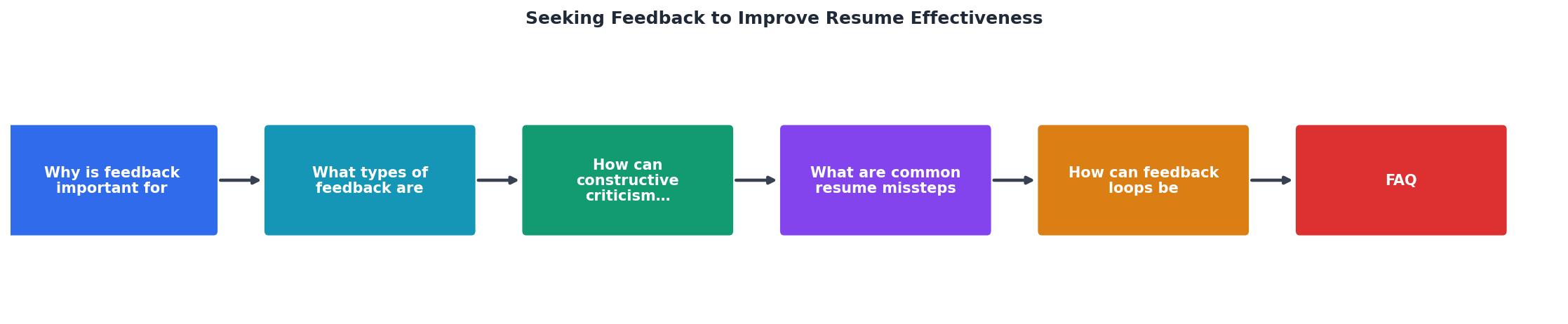
- Get initial feedback. Share your resume with three to five people: at least one industry insider, one career coach or mentor, and one trusted peer. Ask them specific questions tied to a job posting you're actually targeting.
- Identify themes. Look across the feedback. What problems appear in multiple reviews? That's your priority list.
- Make changes. Edit your resume based on pattern feedback. Update verbs, add numbers, tighten bullets, align keywords.
- Test and apply. Use your updated resume to apply to jobs. Track which roles you apply for and which result in interviews. This is your feedback from the market itself.
- Repeat. After 10–15 applications, ask for one more round of feedback. Ask a new reviewer if the changes worked. Refine again.
- Customize per role. Use feedback to build a strong baseline resume, then tailor it slightly for each application. Swap keywords, reorder bullets, emphasize different achievements depending on what the job posting emphasizes.

This loop transforms your resume from a static document into a living, market-tested asset. You're no longer guessing what works. You're learning from real feedback and real results.
Interactive Feedback Assessment Tool
Understanding where your resume stands is the first step. Below is an interactive checklist that helps you assess which areas of your resume most need feedback, organized by common problem categories.
Resume Feedback Priority Assessment
The checklist above helps you spot which areas of your resume need the most attention. Use it as a conversation starter with your feedback sources: "I think my action verbs are weak. Can you confirm?" Specific, targeted feedback is more actionable than "Just review it generally."
Steps to Create a Feedback Loop for Resume Improvement
Your progress is saved automatically in your browser.
FAQ
Frequently Asked Questions
The resume you have right now is getting you some results, but not the ones you want. The gap between where you are and where you want to be lives in feedback you haven't heard yet, and in the action you take after you hear it. Start with one round of targeted feedback this week. Choose one reviewer whose opinion you trust, ask them one specific question tied to a job you're actually targeting, and listen to what they see. Then test what they tell you. That's how feedback becomes results.
Additional Resources
- Using feedback to improve your resume - Ideally look for those who provide balanced and constructive feedback. Avoid those with an agenda or who tend to criticise. This can be ...
- How to ask for effective CV feedback instead of "looks good" - CV: 💭 What is the key message this person is trying to get across? 💭 What is this persons USP? 💭 Have they considered who the reader is/will be ...
- How to Ask for Resume Feedback - 1) Only ask people who have worked with you. 2) Do not ask them to critique your resume – instead ask the specific question “does my resume ...
