
Landing your first job after graduation feels like stepping into a competition where everyone else has a head start. You're competing against candidates with years of experience, and your resume is often your only shot at getting past automated screening systems and in front of a hiring manager. The difference between a generic resume and one tailored to the specific job posting can be the difference between silence and an interview invitation.
Photo by Vitaly Gariev from Pexels
TL;DR
- New graduates secure first jobs by tailoring resumes to match specific job descriptions and keywords.
- Academic achievements, internships, and projects are critical differentiators with limited work history.
- ATS-friendly formatting and strategic keyword use dramatically improve resume visibility to recruiters.
- Personal branding through a targeted resume helps new grads stand out in competitive entry-level markets.
Why New Grads Struggle in Crowded Markets
You have a degree. You completed your coursework, maybe an internship or two, and worked on some projects. Yet applying feels like throwing resumes into a void. Here's why: automated applicant tracking systems (ATS) screen resumes before humans ever see them. These tools scan for keywords and formatting that match the job posting. A generic resume, no matter how well-written, rarely survives that filter. For new graduates with limited experience, this is especially brutal because you have fewer keywords and accomplishments to show. When you don't tailor your resume, you're essentially hoping the ATS finds a match by accident.
The competition is real. Entry-level roles attract hundreds of applications, but companies only advance the top candidates. According to the United States Bureau of Labor Statistics, the unemployment rate for college graduates aged 25 and older with a bachelor's degree was just 4.7% in 2020. But that statistic hides the struggle many new grads face in landing that first role. The difference between new graduates who land jobs quickly and those who struggle for months often comes down to one factor: resume tailoring.
Leveraging Academic Achievements Without Experience

When you don't have five years of work history, your education becomes your primary selling point. But a generic "B.S. in Computer Science" doesn't cut it. Hiring managers want specifics.
Start by identifying relevant coursework. If you're applying to a data analytics role, mention "Statistical Analysis," "Data Visualization," and "SQL Database Design" rather than just listing your major. Pull these directly from the job description when possible. If the posting mentions "Python" and you took a course on Python, say so explicitly.
Include academic honors if you earned them. GPA above 3.5, Dean's List recognition, scholarships, or academic awards all signal competence. Place these near the top of your resume if they're strong.
Capstone projects and senior theses are gold for new grads. These are substantial, real work that shows depth. If your capstone involved building a mobile app for local nonprofits or analyzing market trends for a consulting project, describe the impact. Use numbers: "Designed a scheduling application used by 200+ volunteers," not "Worked on a scheduling app."
Relevant technical skills from coursework matter too. If you took "Web Development" and learned JavaScript, React, and Node.js, list those technologies. Employers scan resumes for specific tools. A new grad who can name exact technologies looks more hirable than one who says "various programming languages."
Why Internships and Projects Are Make-or-Break

This is where new grads who landed jobs beat those who didn't. Any internship, even a short one, is proof that you've worked in a professional setting. Any meaningful project demonstrates you can execute.
Internships give you real accomplishments to showcase. Instead of "Interned at Marketing Agency," write "Increased email campaign click-through rate by 18% through A/B testing subject lines and send times." That's a concrete win. If you worked on social media, mention the follower growth or engagement metrics. If you helped launch a product feature, describe what you built and the outcome.
For projects, include anything substantial outside coursework:- Open-source contributions, Any code you contributed to an open-source project, no matter how small, counts. Link to your GitHub commits.
- Hackathon wins, If you competed, mention the event and what you built.
- Side projects, Built a personal website? Created a tool that solved a real problem? Include it.
- Volunteer work, Nonprofits always need tech help. Web development, database work, or social media management all apply.
"According to the United States Bureau of Labor Statistics, the unemployment rate for college graduates aged 25 and older with a bachelor's degree was just 4.7% in 2020.">, Landing Your First Job: Tips for New Grads
Keywords and ATS: The Hidden Game
Most new grads don't know they're playing a game they don't understand. Applicant tracking systems scan for keywords before a person ever reads your resume. If the job posting mentions "project management" and your resume doesn't, the ATS might filter you out automatically.
Here's how to win: copy key phrases from the job description and incorporate them naturally into your resume. If the posting says "experience with Git version control," and you've used Git, add those exact words. If it mentions "agile methodology," and you've worked in agile environments (even in school), include it.
Tools like Ctrl+F searching job descriptions are your friend. Look for repeated terms, technical skills, and soft skills the employer mentions. These are ATS keywords. Now look at your resume. Do these words appear? If not, add them where they're honest and relevant.
Don't keyword-stuff, though. Hiring managers hate reading "I have experience in JavaScript and JavaScript development using JavaScript frameworks in a JavaScript environment." That screams desperation and gets filtered by modern ATS systems designed to catch this. Instead, weave keywords naturally:
- Use the exact job title or similar terminology.
- Name specific tools or technologies mentioned in the posting.
- Mirror their language for soft skills: if they want "team collaboration," you describe how you "collaborated with cross-functional teams."
- Adjust your summary or objective to reflect the specific role.
Making Your Personal Brand Visible
Personal branding for new grads isn't about being famous. It's about being memorable and credible in your niche.
Start with a LinkedIn profile that matches your resume. Not only do recruiters check LinkedIn, but your profile also serves as an extended resume. Add a professional photo, write a summary that reflects the role you're targeting, and make sure your skills section lists the same keywords your resume does. Link to your portfolio or GitHub if you're in tech.
Create a portfolio if your field allows it. For designers, developers, content creators, and data analysts, a portfolio is nearly essential. Employers want to see your work. A personal website or GitHub with project links proves you can execute. New grads without portfolios are at a disadvantage in competitive fields like tech and design.
Detail matters in your personal brand too. An email address like "john.smith@email.com" is fine; "partyguy420@email.com" is not. Your phone voicemail should be professional. These details signal whether you're treating the job search seriously.
Real Stories from New Grads Who Landed Jobs
Sarah graduated with a degree in digital marketing. Her first resume was generic: "Responsible for social media management, email marketing, and analytics." She got no interviews. Then she tailored it. She pulled keywords from a job posting for "Digital Marketing Coordinator" at a mid-size e-commerce company: "campaign optimization," "conversion rate optimization," "content calendar," "analytics reporting." She rewrote her internship bullet points:
Before: "Managed social media accounts and created content."
After: "Managed social media content calendar across Instagram, Facebook, and LinkedIn; implemented weekly posting schedule that increased follower engagement by 24%; analyzed monthly performance reports to identify top-performing content types."
She also added a quantified capstone project: "Analyzed marketing campaign data for 50+ campaigns using Google Analytics and Excel; identified seasonal trends that informed Q4 budget allocation." That resume got her five interviews in two weeks.
James, a recent computer science graduate, had technical skills but a bare resume. He added specifics:- Changed "Built several projects" to list exact technologies: "Developed Java Spring Boot REST APIs; created React TypeScript frontends; deployed applications on AWS EC2 instances."
- Added GitHub link to three substantial projects with descriptions.
- Included coursework that matched the job: "Machine Learning, Data Structures, Systems Design."
- Tailored each application's bullet points to the job posting.
The pattern is clear: specificity, keywords, and evidence of real work change outcomes.
What Recruiters Actually Look For in Entry-Level Resumes
Recruiters reviewing entry-level resumes have a simple checklist:
- Does the candidate have relevant skills or knowledge? They look for keywords and specific technologies matching the job.
- Has the candidate done anything real with those skills? Internships, projects, or capstone work count. Generic description doesn't.
- Can the candidate communicate effectively? Writing clarity matters. Typos and vague language hurt.
- Is the resume ATS-friendly? Can the system parse it and find the keywords?
- Put your most relevant accomplishments near the top.
- Lead with quantified results.
- Use the same language the job posting uses.
- Make skills easy to spot (often in a dedicated "Skills" section).
Process Overview: Tailoring Your Resume Step-by-Step
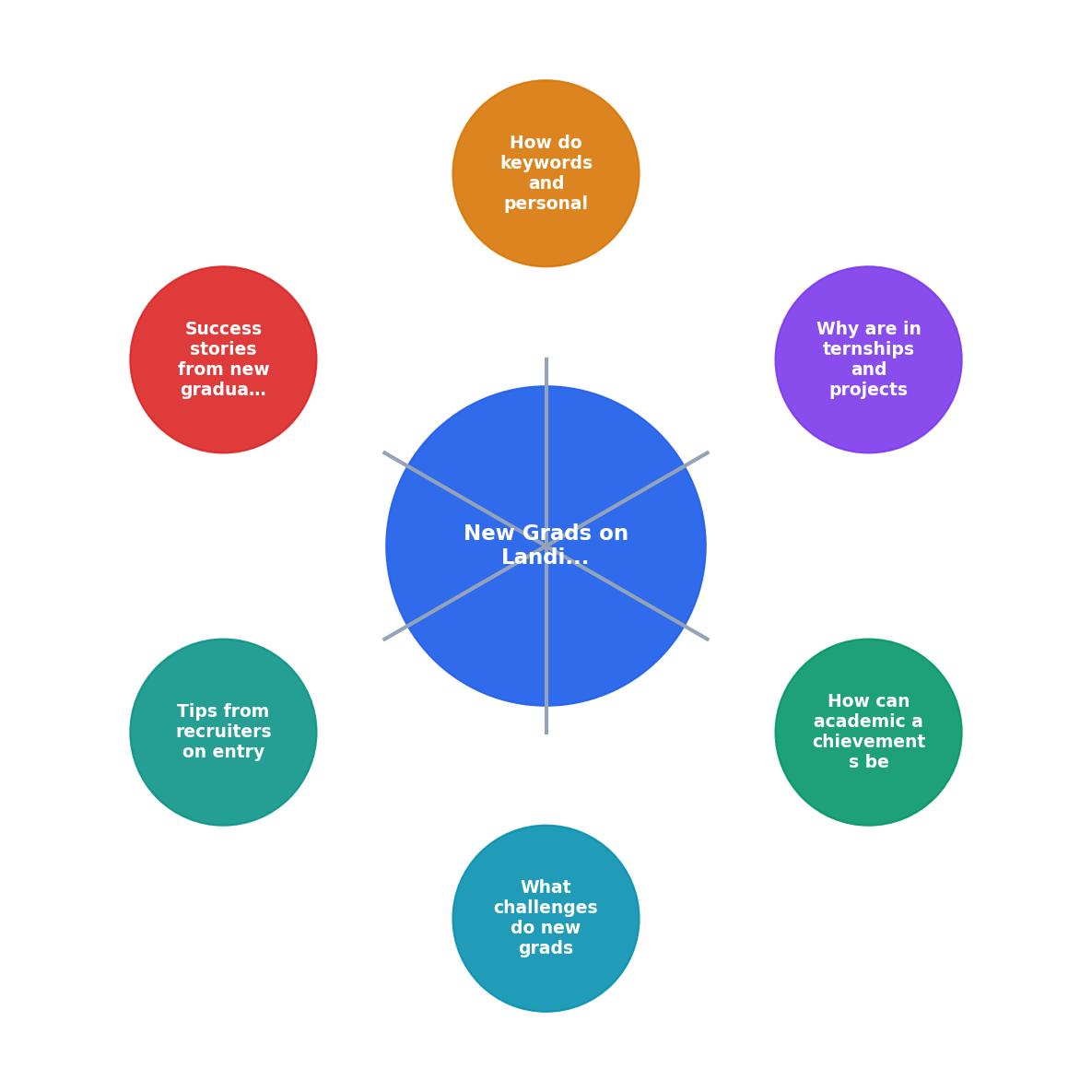
Interactive Resume Strength Dashboard
Before submitting to a job, assess your resume's readiness. Here's what a strong new grad resume looks like:
Your Resume Strength Score
Each of these elements increases your odds of getting past the ATS and into a recruiter's hands. A resume hitting all five points is significantly more likely to land an interview than one missing several.
Checklist for Creating a Standout New Grad Resume
Your progress is saved automatically in your browser.
FAQ
Frequently Asked Questions
New graduates who land their first jobs quickly understand one thing: a tailored resume isn't extra work; it's the baseline. Generic resumes disappear into ATS filters. Tailored resumes get seen. You've earned your degree and built real experience through internships and projects. Your resume should prove it by speaking the language of each employer. The difference between silence and an offer often comes down to whether you took 30 minutes to align your resume with the job posting. That's a trade worth making.
Additional Resources
- Landing Your First Job: Tips for New Grads - For the best results, you should actually be custom-tailoring your resume to every single job for which you apply. The same goes for your cover ...
- How To Write a Resume as a New College Grad in Four ... - Step 1: Analyze the Job Description. Understanding the job description is the first and most crucial step in tailoring your resume. Each ...
- How I Landed My Dream Job Right After Graduation - These are 4 key strategies that worked for me: Stop Mass Applying, Use Human Referrals Niche Down Luck = Opportunity + with the hiring system ...
