
You've sent 30 resumes and heard back from two. You're wondering if your resume even makes it past the screening software, let alone a human recruiter. AI resume tools promise to fix this overnight, tailoring your resume to each job, matching keywords, optimizing for ATS. But can you trust them alone? The real answer is more practical: AI and human editing aren't competitors. They're a workflow. You use AI for speed and keyword precision, then you apply judgment, the thing only you can bring, to make sure the output actually sounds like you and tells your real story.
TL;DR
- AI resume tools excel at speed, keyword matching, and ATS formatting, but they can't know your priorities or judge what's genuinely impressive about your background.
- Human editing catches tone mismatches, factual errors, over-optimization, and the subtle gaps where AI sounds generic.
- The best workflow: use AI as your first draft generator, then edit ruthlessly. Spend your effort on judgment, not typing.
You're applying for jobs in a world where most resumes never reach a human eye. Applicant tracking systems (ATS) scan for keywords, format compliance, and basic relevance before any recruiter sees your name. That filtering happens fast, and AI tools have gotten genuinely good at helping you pass it. But "passing the ATS" and "getting hired" are not the same thing. This guide walks you through where each approach, AI and human editing, actually wins, where it falls short, and how to combine them into a system that works.
The AI Resume Tool Advantage

Resume AI tools are built for one specific job: take your generic resume and the job posting, then rewrite your experience to match that posting's language. They do this through pattern matching on a massive scale. They've seen thousands of resumes and job descriptions, and they can spot which keywords, skills, and achievement formats appear in jobs that convert to interviews.
The speed advantage is real. Tailoring a resume manually takes 20 minutes per application if you're efficient, changing bullets, reorganizing sections, swapping in industry terminology. AI does it in seconds. If you're applying to 15 jobs this week, that's 5 hours saved. More importantly, you're less likely to accidentally send a generic resume that makes you look disengaged.
AI also doesn't get tired of keyword optimization. It will systematically ensure your resume includes the exact terms the job posting uses, "Agile", "React", "stakeholder management", in places where they fit naturally. Recruiters and ATS systems are looking for that vocabulary match. When AI finds a skills gap (you don't mention something the job requires), it can reorganize your existing bullets to highlight relevant experience you might have downplayed.
The format consistency is another win. AI-generated resumes typically follow ATS-friendly structures: chronological work history, clear section headers, no fancy fonts or graphics that confuse scanners. You get compliance for free.
Where AI Resume Tools Fall Short
The AI doesn't know you cut deployment time by 40%, it knows that sentence shape scores well, so it writes it. That distinction matters more than you'd think.
Resume AI tools optimize for a single dimension: keyword density and format compliance. They can't judge whether a claim is actually impressive, whether it's true, or whether it's the best use of your limited resume space. A tool will gladly rewrite "Managed a team of five" as "Led cross-functional collaboration with five engineering stakeholders," because the second version hits more keywords. But if you didn't lead anything, you coordinated, you've just created a lie that sounds better.
Tone collapse is common. AI tools generate a kind of resume monotone: achievement-forward, buzzword-heavy, every bullet trying to sound like it changed the company. Real resumes have variation. You might highlight different things depending on the role. For a startup, you might emphasize scrappiness and speed. For a Fortune 500 company, process and scale. AI defaults to the middle ground, the resume that sounds optimized but forgettable.
AI also can't catch your own mistakes or inconsistencies. If your original resume has an inflated title, AI will propagate it into the tailored version. If you made a typo, same thing. If two bullets say almost the same thing, AI might not notice, it's adding and reweighting, not reading for sense.
Context blindness is real too. AI doesn't know that the job posting's "10 years of experience" is a wishlist, not a hard requirement. It doesn't know that you're overqualified for something or underqualified, and therefore need a different strategy entirely. It just optimizes the resume for that posting alone.
What Human Editing Actually Catches
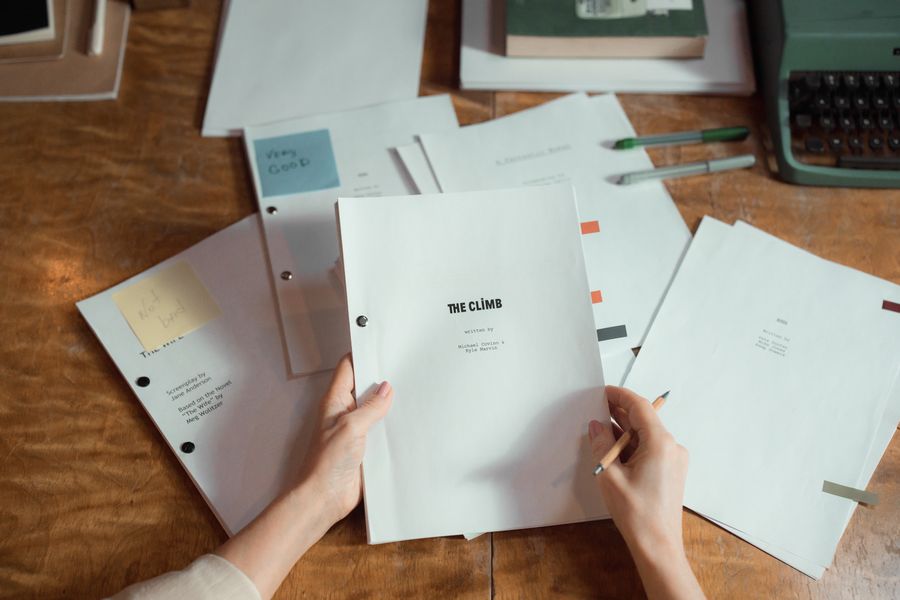
The human eye catches what AI misses: truth, tone, and judgment.
A human editor (you, or someone who knows your work) will read AI-generated bullets and ask, "Did you actually do this? Can you defend this claim in an interview?" AI doesn't care. It optimizes for readability and keyword density, not veracity. This matters because hiring managers often ask follow-up questions on resume claims, and if you can't back it up, you've burned trust before you even started the conversation.
Tone editing is where human judgment shines. You might read an AI-generated bullet and think, "This sounds corporate, and I'm interviewing at a startup." A human catches that mismatch and can either dial it back or suggest a reframe. AI can't do this because it doesn't know your personality or the company culture, it only knows the job posting.
Humans also catch overoptimization. If every single bullet includes a metric or a business outcome, it starts to feel like you're bragging or playing a game. Real resumes have some nuance. You talk about what you built, how you grew, what you learned. AI tends to flatten this into "improved efficiency by X%." A human can restore that texture.
Consistency checks are easier for humans too. If you've listed five different title variations across your resume, or if your dates are off by a month in one place, a human will spot it. AI might miss it if the inconsistency doesn't affect keyword matching.
Most importantly, humans apply judgment about what matters. If you're switching careers, a human editor understands that you need to emphasize transferable skills differently than someone staying in the same field. AI will just optimize for the job posting's explicit requirements, which might not tell the real story of why you're a good fit.
The Hybrid Workflow That Actually Works
Here's the system: treat AI as your first-draft engine, then edit like your interview depends on it, because it does.
Step 1: Generate with AI. Upload your base resume and the job posting to a resume AI tool. Get the tailored version. This saves you 20 minutes of manual rewording and ensures you're using the job posting's vocabulary. Accept this as a starting point, not a finished product.
Step 2: Read it aloud. Print or read the AI version out loud. You'll catch tone problems immediately. If it sounds like a robot wrote it, mark those spots for editing.
Step 3: Fact-check every claim. Go through each bullet and ask: Can I prove this in an interview? Is it true as written? If you're fuzzy on a metric or you exaggerated, fix it now. Hiring managers will ask.
Step 4: Restore your voice. Find 2–3 bullets that sound completely generic or corporate. Rewrite them to sound more like you. For one, add a specific detail. For another, change the focus from the output to what you learned or built.
Step 5: Check for consistency. Make sure job titles, dates, and skill names are consistent across the resume. Verify that no bullet is redundant with another. Remove anything that doesn't serve the narrative of why you're a fit for this specific job.
Step 6: Have someone else scan it. A second set of eyes (even a friend) will catch typos and tone issues you're now blind to. They'll also tell you if a claim sounds believable or oversold.
Real-World Examples
Let's look at how this plays out.
Scenario 1: Same bullets, different jobs. You're a project manager applying to both a fintech startup and a healthcare consulting firm. The AI tool generates two very different versions of your "managed stakeholder communication" experience. For fintech, it emphasizes speed and cross-functional collaboration. For healthcare, it stresses compliance and documentation. Both are true, you did both. Human editing here is catching that the AI picked the right emphasis for each, or adjusting if it got it wrong.
Scenario 2: Overoptimization trap. AI rewrites "Led the redesign of our support process" to "Redesigned support process, reducing ticket resolution time by 23%, improving customer satisfaction by 4.2 points, and decreasing operational cost by $120k annually." All of that might be true, but now this single bullet is dominating your resume and sounds like an inflated highlight reel. Human editing says: "Keep the outcome metrics, but remove the cost savings claim if you're unsure about it. Add one sentence about the approach you used, agile iteration, data analysis, whatever, so it sounds like you led something, not just hit numbers."
Scenario 3: Career change mismatch. You're switching from teaching to instructional design. AI sees "instructional design" in the job posting and generates bullets about curriculum development and learning outcomes. True, that's what you did as a teacher. But human editing recognizes that for a corporate instructional design role, you need to reframe this around user needs, learning management systems, and measurable skill transfer. AI generated the raw material; human judgment provided the bridge.
Interactive Workflow Comparison
To help you visualize how AI and human editing fit together, here's a breakdown of what happens at each stage:
AI vs Human: Where Each Shines
Resume AI + Human Editing Checklist
Your progress is saved automatically in your browser.
FAQ
Frequently Asked Questions
The Real Competitive Edge
Additional Resources
- Best AI resume builder in 2026: which is worth it? - Quick answer: Rezi is the best full AI resume builder for ATS-safe formatting, Teal has the strongest free tier, and Jobscan gives the ...
- How to choose the best resume builder for your career ... - The downside: The AI integration of Zety is shallow compared to 2026 expectations. This tool doesn't offer deep content tailoring. Best for: ...
- Are AI Resume Checkers Accurate? (2026 Reality Check) - Building One Career at a time · Use AI for the "Bones": Use checkers to ensure your formatting is clean and you aren't missing major keywords.