You've spent years perfecting your design craft, but your resume doesn't reflect the depth of your UX work. ATS systems skip over your wireframes and prototyping experience, and hiring managers never see the usability improvements you've delivered. The gap between what you've accomplished and what your resume communicates costs you interviews. Tailoring your resume specifically for UX designer roles closes that gap fast, positioning your experience in the language recruiters actually scan for.
Photo by Jakub Zerdzicki from Pexels
TL;DR
- Focus your resume on core UX skills: user research, wireframing, prototyping, usability testing, and information architecture.
- Highlight measurable outcomes from your design work (completion rates, conversion improvements, user satisfaction scores).
- Include design portfolio links and specify which tools you use (Figma, Sketch, Adobe XD, Protopie).
- Front-load your resume with ATS keywords like "user research," "interaction design," "design system," and "user testing."
Getting your resume in front of actual humans starts with understanding what ATS systems filter for and what hiring managers care about. UX design roles reward specificity over vague design talk. Saying you "improved user experience" tells nobody anything. Saying you "reduced task completion time from 4.2 minutes to 2.1 minutes through iterative wireframing and usability testing with 8 participants" proves impact. That's the difference between landing interviews and disappearing into the digital void.
What Are the Essential Skills for a UX Designer Role?
UX design hiring managers screen for a specific toolkit. These aren't soft skills; they're measurable, portfolio-backed capabilities that directly impact job performance.
User research is the foundation. Whether it's interviews, surveys, heatmaps, or usability testing, hiring managers want evidence you understand how to gather insight about user behavior. This is where most resumes fail, designers list "conducted user research" without specifics. Better: "Conducted 12 moderated usability sessions with target users, identifying 6 critical usability blockers in checkout flow; fed findings into redesign affecting 50K+ monthly users."
Wireframing and prototyping are the workhorse skills. You need to show you can move from research to testable designs. Figma and Adobe XD are the current standards, but Sketch and Protopie also matter in certain markets. Your resume should name the tools you use, ATS systems scan for these by name.
Interaction design (IxD) covers how elements respond to user input: button states, micro-interactions, animations, and feedback loops. This is especially important in product design and fintech roles, where interaction design significantly impacts conversion.
Usability testing deserves its own line. Don't bury it. Quantify it. "Conducted 5-round A/B usability test with 40 participants, measuring task completion, error rates, and System Usability Scale (SUS) scores." Hiring managers see "usability testing" and think rigor.
Information architecture (IA) is often overlooked on resumes but heavily valued by hiring teams. If you've designed taxonomy structures, navigation systems, or content organization, make it visible. "Redesigned IA for 200-page enterprise platform, reducing average task time by 31% and support ticket volume by 18%."
Design systems work shows you think at scale. If you've contributed to or built a design system, component libraries, documentation, design tokens, that's a major plus. Mention it explicitly: "Built and maintained design system component library in Figma, covering 40+ components; reduced design-to-dev handoff time by 25%."
How to Showcase Your Design Portfolio Effectively
Your portfolio lives outside your resume, but your resume must make the portfolio irresistible to visit. This is critical.
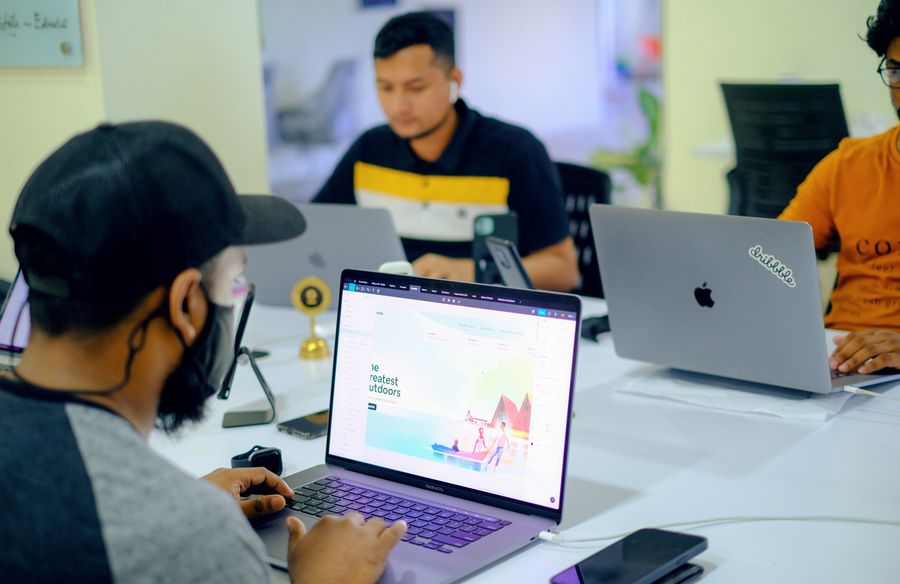
Link to your portfolio early and prominently. Treat it like a core credential alongside your LinkedIn URL. Many resumes bury portfolio links in a small footer or, worse, hide them behind a non-standard format. Instead, put it in a "Design Portfolio" or "Featured Work" line near the top, right after your contact information: "Portfolio: yourname.com/work."
When you list projects on your resume, mirror your portfolio structure. The project title on your resume should match the portfolio project title exactly. This helps both humans and ATS systems connect the dots. If your portfolio case study is called "Fintech Onboarding Redesign," your resume should say "Fintech Onboarding Redesign" too, not "Redesigned mobile app onboarding flow" buried in a paragraph.
For each project you list, provide the URL or reference the portfolio page explicitly. Example:
"Fintech Onboarding Redesign (portfolio.com/fintech-onboarding)
Reduced account-opening drop-off from 34% to 12% through iterative prototyping and usability testing. Conducted 8 moderated sessions, analyzed heatmaps, redesigned 5 screens. Shipped to 400K+ users."
This tells recruiters exactly where to find your work and what to expect.
Specify your role on each project. If you were the solo designer, say so. If you were part of a team, clarify: "Led interaction design and usability testing; collaborated with product and engineering." ATS systems and humans alike need to know what YOU did, not just what the project was.
Which Projects Should You Highlight?
Not all projects deserve resume real estate. Prioritize work that demonstrates the skills the job posting specifically asks for.
Read the job description carefully. If it emphasizes e-commerce experience, don't lead with your B2B SaaS project. If it's a senior role requiring design system maturity, skip the one-off UI refresh you did in 2023. Select 3-5 projects maximum; quality over quantity prevents clutter and keeps focus.
Project selection also depends on recency. Your most recent work should generally be stronger, it reflects your current capabilities. If your best project is 4 years old, you need fresher work. This isn't about quantity; it's about demonstrating you're actively growing.
Variety matters. If all your projects are consumer apps, a job posting for B2B enterprise software will wonder if you understand enterprise constraints. If you have diverse project types, show a breadth of experience. However, if the job posting is very specific (e.g., "Must have mobile app experience"), emphasize relevant projects first.
Measurable outcomes make projects memorable. "Designed navigation system" is forgettable. "Designed navigation system tested with 6 user groups; improved findability by 42% and reduced support queries by 19%" sticks. If you have quantifiable results, include them. If you don't, add them during research for this application, go back to your project notes, analytics, or stakeholder feedback and extract numbers.
How to Align Your Resume with ATS Keywords
ATS systems scan resumes for exact keyword matches. If the job posting says "interaction design" but your resume says only "UI design," the ATS may deprioritize you. Keyword alignment is mechanical but essential.
Start with the job description. Extract every skill, tool, and responsibility mentioned. Create a list:
- Required skills: "user research, prototyping, Figma"
- Nice-to-have skills: "design systems, user testing"
- Tools mentioned: "Adobe XD, Sketch, Miro"
- Experience level: "3+ years UX design"
- Context: "mobile-first, SaaS, fintech"
Mirror language naturally. If you're a generalist with experience across UX disciplines, make sure those disciplines are named explicitly. Don't just say "designed the product"; say "led user research, information architecture, wireframing, and usability testing for the product redesign."
Technical tools matter for keyword matching. If you use Figma, Sketch, and Adobe XD, list them prominently. Many UX positions filter candidates by tool proficiency. Put them on your resume explicitly, either in a "Tools & Software" line or woven into project descriptions: "Prototyped responsive interaction patterns in Figma; iterated based on 6-user testing sessions."
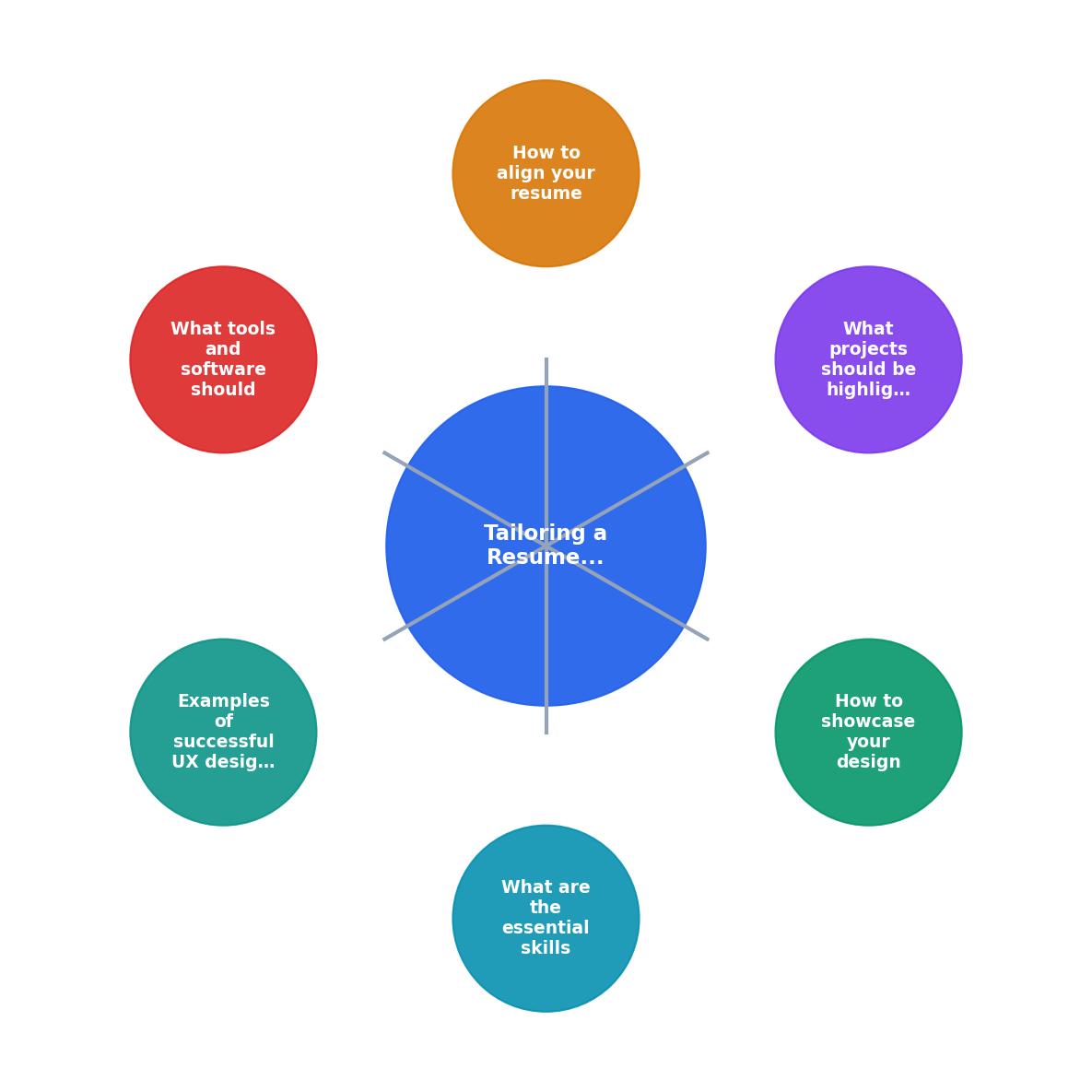
Common ATS Keywords for UX Designer Roles
This interactive card shows you exactly which keywords ATS systems scan for when filtering UX designer applications. Match as many as you legitimately can to your experience; don't fabricate skills you don't have, but if you do have them, name them clearly on your resume.
What Tools and Software Should You Mention?
Tool proficiency is a real hiring filter. Some teams use specific tools exclusively; others care less but still expect baseline competence.
Figma is the current default. If you use Figma, mention it. Most UX roles now expect Figma proficiency. If a job posting specifically says "Figma required," you must list it.
Sketch remains common, especially in agencies and Apple-focused design cultures. If you're strong in Sketch, include it. It's not going anywhere despite Figma's dominance.
Adobe XD is less common than it was two years ago but still appears in enterprise and Adobe-aligned organizations. Include it if you use it regularly.
Protopie has grown in popularity for interaction design work, especially for teams building complex interactions or micro-interactions. If you've used it, name it, it signals advanced prototyping skills.
Miro and FigJam are standard for collaboration, research synthesis, and workshops. If you run workshops or synthesis sessions, mention one or both. Many jobs now expect "Miro" or "collaborative design tools" experience.
Accessibility tools like Axe, WAVE, or Contrast Checker matter more every year. If you've audited designs for WCAG compliance, say so. "Audited and improved WCAG 2.1 AA compliance across 45 screens" is specific and valued.
Analytics tools like Google Analytics, Hotjar, or Amplitude are underrated on UX resumes. Many designers never mention them. If you use these to inform design decisions, it strengthens your candidacy: "Analyzed Hotjar heatmaps and session recordings to identify drop-off points; used findings to redesign checkout flow, increasing conversion by 8%."
Don't list every tool you've ever touched. Stick to tools you've used professionally in the last 2-3 years and that are relevant to the role. If the job posting lists specific tools, match them. If it doesn't specify, include 4-6 tools you're strong in.
Examples of Successful UX Designer Resumes
Strong project descriptions follow a pattern: problem, action, outcome.
Weak: "Designed mobile app interface for a fintech startup."
Strong: "Mobile Onboarding Redesign – Fintech Startup
Identified 34% account-creation abandonment through heatmap analysis and user interviews. Designed streamlined 3-step onboarding flow, replacing 8-step original. Prototyped in Figma, conducted 6-user moderated testing sessions, iterated on feedback. Shipped to production; reduced abandonment to 12% within 90 days. Impacted 400K+ users."
- It names the problem (34% abandonment).
- It shows the research method (heatmaps, interviews).
- It demonstrates design work (3-step redesign).
- It specifies tools (Figma).
- It includes validation (user testing).
- It quantifies the outcome (12% abandonment, 400K+ users).
Design System Foundation – B2B SaaS Platform
Audited existing design patterns across 5 product areas; documented 40+ inconsistencies in color, typography, and component states. Built foundational design system in Figma with component library, design tokens, and handoff documentation. Introduced component naming conventions and versioning system. Trained product team on system usage; reduced design-to-dev handoff time by 25% and improved component reusability score from 12% to 68%.
- It shows scope (40+ inconsistencies, 5 product areas).
- It demonstrates system thinking (tokens, naming, versioning).
- It includes team impact (training).
- It quantifies outcomes (handoff time, reusability score).
"Redesigned the checkout flow after 12 usability sessions; task completion rose from 71% to 88%.">, UX Designer Resume: Keywords & How to Tailor It
UX Designer Resume Tailoring Checklist
Your progress is saved automatically in your browser.
FAQ
Frequently Asked Questions
Your resume tailors best when it reflects how you actually work, the research methods you use, the tools you prefer, the outcomes you've driven. Misrepresenting your skills or overstating your role in projects will show up fast when you interview. Hiring managers ask for specifics, and if your resume claimed usability testing and you've never actually run a session, you'll be exposed immediately. Build your resume honestly, quantify what you've genuinely accomplished, and your qualifications will speak louder than any keyword stuffing ever could.
Additional Resources
- UX Designer Resume: Keywords & How to Tailor It - CVder - The keywords UX designer job descriptions use, tailored bullet examples, common design resume mistakes, and the knockout requirements to check first.
- 10 UX Designer Resume Examples for 2026 - Tailor your resume to the job description. One of the biggest mistakes I see on UX designer resumes is a lack of tailoring to the specific job description.
- Top 4 Essential Tips for Crafting a Standout UX Designer ... - Tailoring your resume: Understand how to customize your resume for your dream UX role, highlighting the skills and projects that matter most.