Crafting a Cover Letter That Complements a Resume Post-Career Break
A career break, whether due to parenthood, health, education, or life circumstances, is not a liability. It's an opportunity to reframe your experience, demonstrate growth, and show employers exactly why you're ready to return. A strategic cover letter transforms a resume gap from a question mark into a compelling narrative that reassures hiring managers and positions you as a thoughtful, committed candidate.

Photo by cottonbro studio from Pexels
A career break, whether due to parenthood, health, education, or life circumstances, is not a liability. It's an opportunity to reframe your experience, demonstrate growth, and show employers exactly why you're ready to return. A strategic cover letter transforms a resume gap from a question mark into a compelling narrative that reassures hiring managers and positions you as a thoughtful, committed candidate.
TL;DR
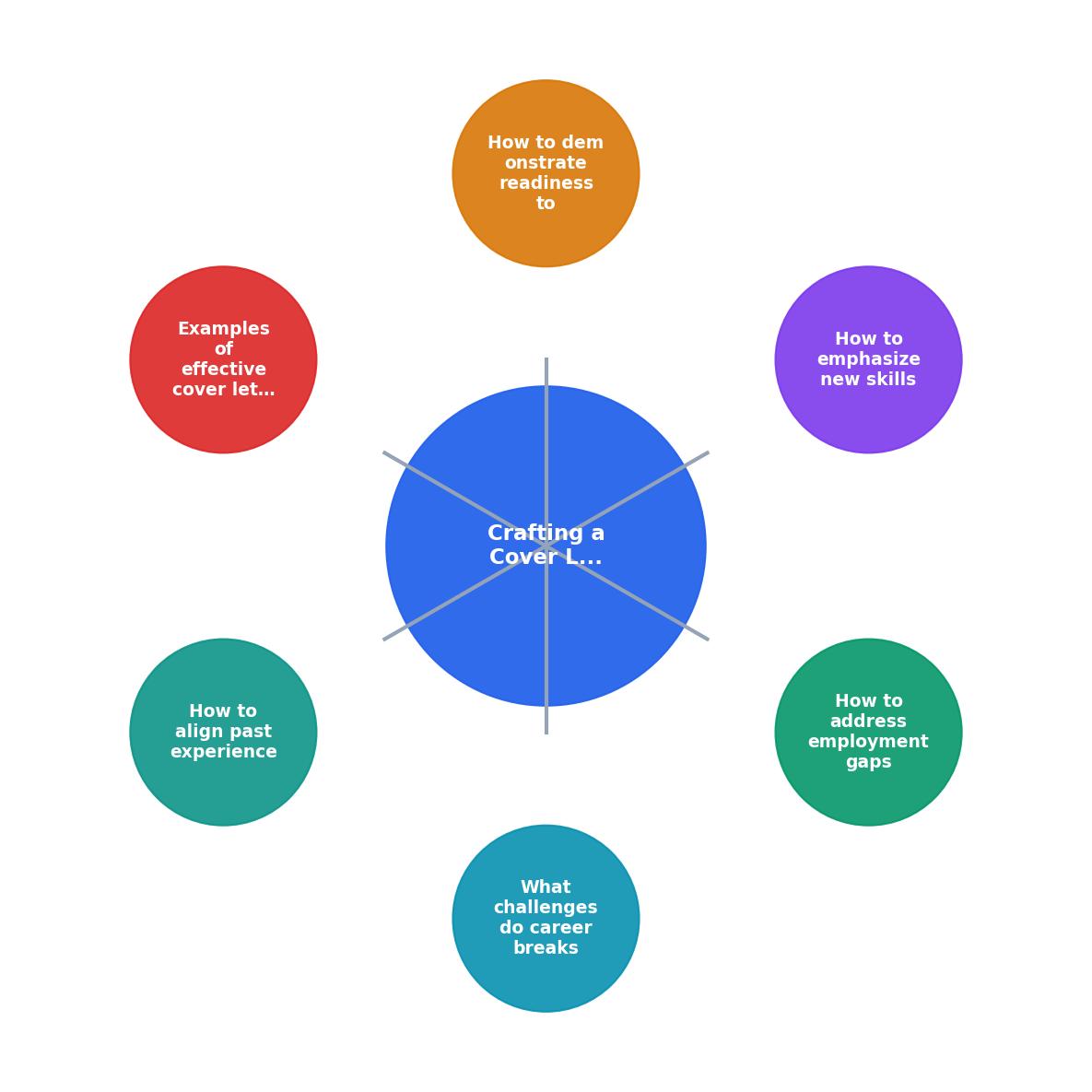
- Address employment gaps directly and briefly, without over-explaining or apologizing
- Highlight new skills and perspectives gained during your break that strengthen your candidacy
- Demonstrate readiness to re-enter the workforce with concrete examples of recent engagement
- Align your past accomplishments with the current role's needs to bridge past and present
- Use language that builds confidence in your reliability and commitment to the position
Why career breaks matter in hiring
Employers aren't hunting for red flags, they're hunting for fit. That said,
When a hiring manager sees a resume with a gap, their brain naturally fills the silence with questions: Why did you leave? Are you still sharp? Can you jump back in? Will you disappear again? Your cover letter is where you answer these questions before they ask them.
A well-crafted cover letter after a career break does three things: it normalizes the gap, it demonstrates continued relevance, and it builds confidence. It's not about pretending the break didn't happen. It's about owning it strategically.
Addressing employment gaps directly
The biggest mistake people make is treating the gap like a secret. They don't mention it, hoping the employer won't notice. Employers notice. And silence amplifies doubt.
Instead, address the gap in your cover letter with clarity and brevity. This is not your life story, it's a professional explanation.

Here's the framework:
- Name the break honestly - "I stepped back from my role in [field] in [year] to [specific reason]."
- Keep it concise - One sentence. Not an apology, not a therapy session.
- Pivot to what's relevant - Immediately transition to what you've been doing, learning, or preparing during that time.
That's it. You've acknowledged it. You've moved on. The employer now has context instead of questions.
Don't apologize
This is crucial. Phrases like "I apologize for the gap" or "I understand this may be a concern" signal shame and undermine your credibility. You have nothing to apologize for. Your break was your choice or your necessity, either way, it's legitimate.
Instead, use active, confident language: "I took time to [specific thing]" rather than "I was out of work." One positions you as someone who made a deliberate choice; the other positions you as passive.
Emphasizing new skills acquired
Career breaks are skill-building opportunities, even if it doesn't look that way on the surface. While you weren't in a traditional role, you likely developed capabilities that matter in today's job market.

Common skills acquired during career breaks:
- Project management - Managing a household, caregiving, or volunteer initiatives teaches prioritization and execution
- Problem-solving - Navigating life transitions builds resilience and creative thinking
- Digital literacy - Many breaks include self-directed learning, online courses, or upskilling
- Communication - Teaching, mentoring, or community work sharpens your ability to explain and influence
- Independence - Self-directed work, freelancing, or consulting develops autonomy and initiative
- Industry-specific certifications - You may have completed training relevant to your target role
"Research the company to help you determine your approach.">, How to write an effective cover letter (with samples)
Link these newly acquired skills to the specific job description. If the role requires data analysis and you took a course in Python, mention it. If they need someone organized and you spent two years managing a complex family schedule, frame it as operational excellence. The skills are real; the translation is strategic.
Demonstrating readiness to re-enter
Employers want proof you're ready. Not just saying it, showing it. This is where recent actions matter.
Concrete signals of readiness:
- Recent certifications or courses - Completed within the last 6–12 months (shows active engagement)
- Volunteer or freelance work - Demonstrates you've stayed engaged professionally
- Industry involvement - Attending conferences, joining professional associations, contributing to open-source projects
- Published work - Articles, blog posts, case studies in your field
- Personal projects - If relevant to the role (a marketing candidate's blog, a developer's GitHub portfolio)
- Networking activity - You've had recent conversations with people in the industry
Example: "While I stepped back from consulting in 2021, I've remained connected to the industry. I completed the Google Analytics certification last year, contributed analysis to a nonprofit project this past quarter, and regularly engage with the product community on LinkedIn. I'm energized to return to full-time work, and this role aligns perfectly with where I want to direct that energy."
Notice the progression: you addressed the break, proved you stayed sharp, and showed enthusiasm. You're not desperate; you're ready.
The bridge strategy: connecting past to present
Your past experience is valuable, but only if it connects to the job you're applying for. This is where alignment matters most.
The bridge strategy works in three steps:
- State what you did before - "In my five years in brand management, I led campaigns that increased market share by 18%."
- Explain what you learned during the break - "During my time away, I deepened my understanding of digital-first marketing and studied emerging consumer behavior trends."
- Show how it applies now - "This combination of hands-on campaign experience and fresh perspective on digital strategy positions me to drive the innovative approach your team needs for the Q3 launch."
Tailor ruthlessly
Don't use the same cover letter for every job. After a career break, fit becomes your competitive advantage. If a job posting emphasizes "adaptability," reference a specific example of how you adapted during your break. If they need "someone who loves learning," mention recent courses or certifications.
This specificity signals that you're serious about the role, not just desperate for any job. It also gives the hiring manager concrete reasons to move you forward.
Examples of effective cover letters post-career break
Example 1: Return from Parental Leave
"I stepped back from my role in HR operations in 2022 to focus on expanding my family. After two years at home, I'm energized to return to work and bring my experience leading recruitment and onboarding initiatives back to a professional team. During my time away, I pursued certification in People Analytics and stayed engaged by mentoring early-career professionals through a nonprofit. I'm particularly drawn to this Senior HR Specialist role because your emphasis on building scalable hiring systems aligns with my interest in applying data-driven approaches to talent acquisition, an area I've spent the last year studying. My combination of hands-on HR leadership and recent focus on analytics tools positions me to contribute meaningfully from day one."
This example: acknowledges the break, validates it, shows recent engagement, mentions a relevant skill (analytics), and connects past experience to current needs.
Example 2: Return from Career Transition
"I left marketing to pursue a bootcamp in UX design in 2023, recognizing that my interest in user experience extended beyond campaign optimization. Over the past 18 months, I've completed the program, built a portfolio of three client projects, and maintained my marketing knowledge through freelance work with two early-stage companies. This hybrid background, combining strategic thinking from marketing with fresh UX design training, makes me a strong fit for your Product Designer role, where cross-functional communication will be essential. I'm ready to bring both technical design skills and a business mindset to your growing team."
This example: frames the break as purposeful career development, proves you've completed the transition, shows ongoing work, and connects the old skill to the new role.
Example 3: Return After Health or Personal Leave
"I took time away from my engineering role in late 2022 to focus on my health and personal well-being. I'm pleased to share that I've recovered well and am enthusiastic about returning to technical work. To stay current during my break, I completed an advanced course in cloud architecture last year and contributed code to an open-source project this past summer, both of which renewed my passion for solving complex infrastructure problems. Your team's focus on scalable backend systems excites me, and my decade of experience combined with recent upskilling in modern cloud practices positions me to contribute immediately. I'm committed to this role and to building a sustainable long-term fit with your organization."
This example: respectfully addresses the leave without over-explaining, proves engagement and current skills, connects past experience to present role, and signals commitment.
Aligning past experience with current aspirations
Sometimes a career break happens alongside a shift in what you want from work. You might return to the same field but a different role, or pivot entirely. Your cover letter must handle both the break and the shift.
Here's how to think about it:
- Same field, different role? Emphasize the skills from your previous role that transfer to the new one. "My experience managing a $2M marketing budget taught me resource allocation, directly applicable to the operations coordinator role."
- New field, same level? Show how your old domain knowledge transfers. A teacher applying to instructional design can emphasize "audience analysis," "curriculum design," and "learning outcomes", language that exists in both worlds.
- New field, new level? This is harder but doable. Highlight universal skills (communication, problem-solving, project management) and show aggressive upskilling. "While my background is in sales, my 18-month focus on data science and analytics, combined with my ability to communicate insights clearly, positions me for this data analyst role."
Building your post-career-break cover letter
Below is an interactive visual guide showing the key components to include and how they flow together. This structure applies whether your break was three months or three years.
Post-Career Break Cover Letter Flow
State your interest and why this role matters to you personally. Make it specific, reference the company or role detail that resonates.
Name the break briefly (one sentence), then immediately transition to what you've been doing, learning, or accomplishing.
Connect past experience + new skills to the job description. Use their language. Show you've thought about the fit.
Reference recent certifications, volunteer work, projects, or professional engagement. Concrete proof you're current.
Express enthusiasm, reiterate your fit, and invite a conversation. No hedging. You're ready.
This structure works because it addresses employer concerns in order: "Are you interested and thoughtful?" → "Can you explain the gap?" → "Do you have relevant skills?" → "Are you current?" → "Are you confident?" By the time they finish reading, you've answered all five.
Post-Career Break Cover Letter Checklist
Your progress is saved automatically in your browser.
FAQ
Frequently Asked Questions
Bringing it together
Your cover letter is not a defense of your career break. It's a bridge between your past experience, your current readiness, and the specific role you're pursuing. Frame the break as context, not as a liability. Show recent engagement and concrete skills. Connect your accomplishments to the job at hand. And write with confidence, not desperation.
Employers hire people who are ready, relevant, and realistic. After a career break, you have the chance to be all three. Use your cover letter to prove it. And if you're tailoring your resume alongside your cover letter, Resume Hedgehog can help ensure both documents work together to present your strongest, most ATS-friendly case.
Additional Resources
- How to write an effective cover letter (with samples) - Cite a couple of examples from your experience that support your ability to be successful in the position or organization. · Try not to simply repeat your resume ...
- Cover Letter Resources - University Career Center - The main purpose of the first paragraph is to introduce yourself and tell why you are writing. You want to grab the employer's attention: why you are interested ...
- How to Explain a Career Break in a Cover Letter - USC Online - “If it's not that long of a career break, you don't need to mention it. A month or two or three or four, don't say anything in the cover letter.

Get the 356 complete recruitment audit (free PDF)
Download the free PDF with 356 reasons hiring stalls, plus optional daily email tips. No credit card.
Get the free PDF 356 reasons · Free download