Formatting a Resume for an Internship Application
You found the internship listing. The company looks great, the role matches your interests, and the deadline is three days away. Then you open a blank document and realize you have no idea how to fill an entire page when your professional experience section is basically empty. The good news is that internship recruiters expect exactly that, and the format you choose determines whether your resume gets a second look or lands in the reject pile.

You found the internship listing. The company looks great, the role matches your interests, and the deadline is three days away. Then you open a blank document and realize you have no idea how to fill an entire page when your professional experience section is basically empty. The good news is that internship recruiters expect exactly that, and the format you choose determines whether your resume gets a second look or lands in the reject pile.
Photo by Sora Shimazaki from Pexels
TL;DR:- An internship resume puts education, coursework, and projects above work experience.
- Each section should be tailored to the specific internship role using keywords from the job posting.
- One page, clean formatting, and concrete results beat fancy templates every time.
Most hiring managers screening intern candidates already know you lack years of experience. They are looking for signals: relevant coursework, hands-on projects, leadership in student organizations, and a clear connection between your background and the role. A well-formatted internship resume surfaces those signals in under 30 seconds. A poorly formatted one buries them.
The structure below works for virtually any internship, from software engineering to marketing to finance. Adapt the details, keep the skeleton.
Essential Sections of an Internship Resume
Every internship resume needs five core sections, arranged in a specific order that puts your strongest material first.
- Contact header with your name, phone, email, LinkedIn URL, and (optionally) a portfolio link. Skip your full mailing address; city and state are enough.
- Education placed directly below the header. This is your headline credential.
- Relevant coursework or skills that map to the internship description.
- Projects, research, or extracurriculars that demonstrate applied ability.
- Work experience if you have any, even part-time or freelance roles.
The top third of your resume gets the most attention. Place your name, degree, GPA (if 3.0 or above), and one or two standout items there. Everything below the fold is supporting evidence.
Highlight Education and Coursework

Your education section carries the weight that work experience carries on a mid-career resume. Here is how to make it count:
- University name, degree, expected graduation date. Write "Bachelor of Science in Computer Science, Expected May 2027" rather than just "CS Major."
- GPA if it is 3.0 or higher. If your major GPA is stronger than your cumulative, list both.
- Relevant coursework as a short list (4-6 courses max). Pick courses that directly relate to the internship. Applying for a data analytics internship? List "Statistical Methods, Database Systems, Data Visualization" rather than "Intro to Philosophy."
- Academic honors like Dean's List, scholarships, or departmental awards.
For example, if you are applying to a product management internship at a company like Atlassian, listing "Agile Software Development" and "User Experience Design" as coursework creates an immediate connection. "Organic Chemistry" does not, unless the internship is in biotech.
"The key is to highlight your potential, eagerness to learn, and genuine enthusiasm for the internship.">, How to write an internship resume (+ an example)
Projects and Extracurriculars Matter

Projects are the great equalizer. They prove you can apply knowledge, not just absorb it. Treat each project entry like a mini work experience entry:
- Project name and context (class project, hackathon, personal project, open-source contribution).
- What you built or did in one sentence.
- Tools and technologies used.
- Quantifiable result if possible.
Budget Tracker Web App | React, Node.js, PostgreSQL
Built a full-stack expense tracking application for a software engineering capstone. Implemented user authentication, data visualization dashboards, and CSV export. Deployed on Heroku with 50+ active test users during the semester.
That entry tells a recruiter more about your capabilities than "Cashier at Target, 2024-2025" ever could for a software internship.
Extracurricular activities also belong here, especially leadership roles. Serving as treasurer of a student club demonstrates budgeting and accountability. Leading a hackathon team shows collaboration under pressure. Tutoring peers in calculus shows communication skills.
Format extracurriculars the same way: role, organization, dates, and 1-2 bullet points describing what you accomplished.
Tailor Your Resume to Each Role

Sending the same generic resume to every internship is the fastest way to get filtered out. Applicant Tracking Systems (ATS) scan for keyword matches between your resume and the job description. No match, no interview.
Here is the tailoring process at a glance:
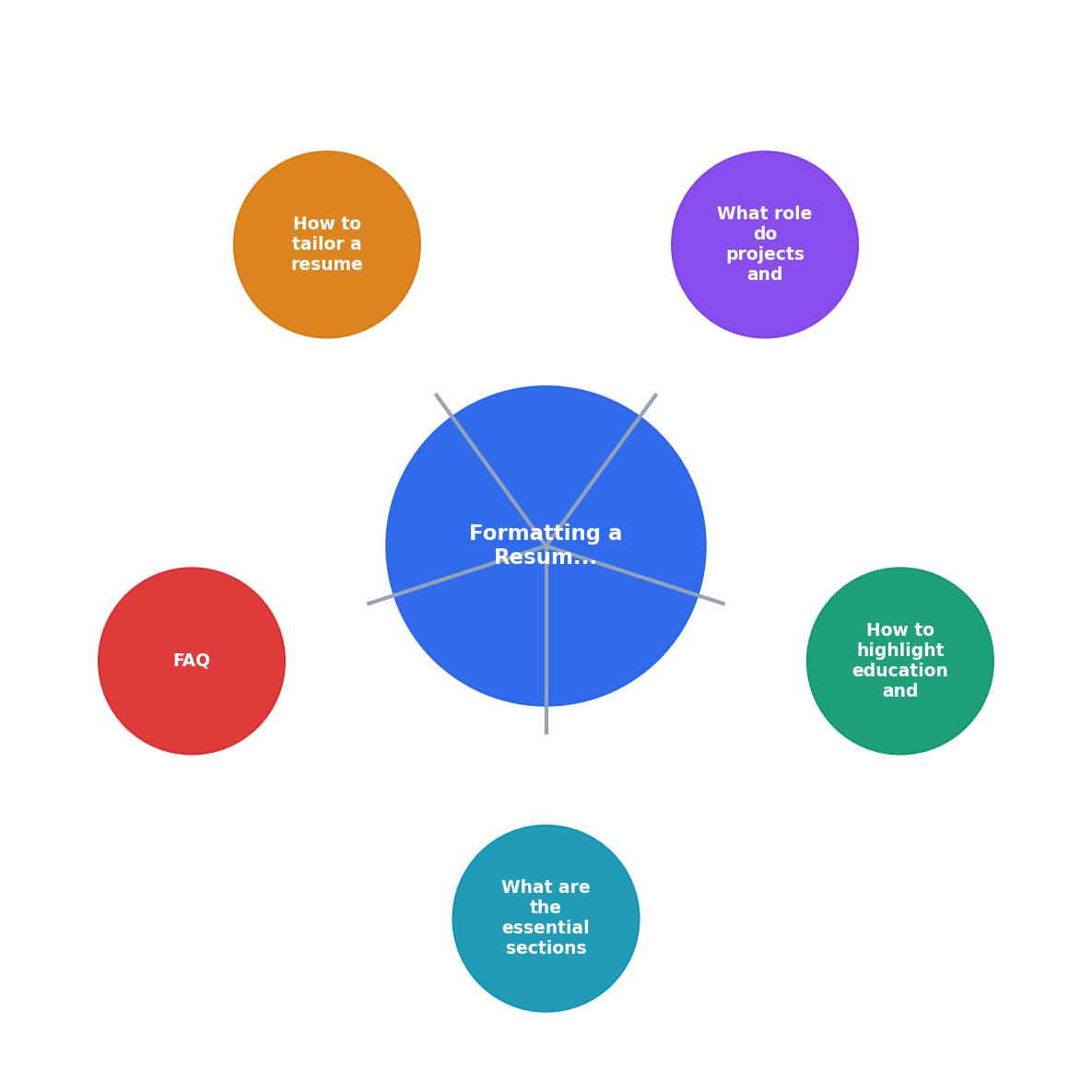
Follow these steps for each application:
- Read the job posting and highlight required skills, tools, and qualifications.
- Match keywords from the posting to your coursework, projects, and skills.
- Reorder bullet points so the most relevant ones appear first in each section.
- Mirror the language. If the posting says "data analysis," use "data analysis" on your resume, not "data science" or "analytics work."
- Remove irrelevant items. That pottery elective does not help your finance internship application.
This is where a tool like Resume Hedgehog saves real time. Upload your resume, paste the internship job description, and it identifies keyword gaps and formatting issues that ATS software flags. For students applying to 10 or 15 internships in a cycle, that kind of automation keeps each application sharp without burning entire weekends on manual edits.
| Generic Resume | Tailored Resume |
|---|---|
| Same version sent everywhere | Customized per job posting |
| Random skill order | Skills matched to job keywords |
| Irrelevant coursework listed | Only relevant courses shown |
| Low ATS match rate | High ATS match rate |
| Fewer callbacks | More interview invitations |
Here is an example of what an ideal internship resume layout looks like, section by section:
Ideal Internship Resume Layout
Sections ordered by impact for early-career candidates
Contact Header
Name, phone, email, LinkedIn, portfolio link
Education
Degree, GPA, relevant coursework, honors
Skills
Technical and soft skills matched to the job posting
Projects & Research
Capstone, hackathon, open-source, personal builds
Extracurriculars & Leadership
Clubs, volunteer work, team roles with outcomes
Work Experience
Part-time, freelance, or prior internships (if any)
Formatting Details That Count
Small formatting choices add up. Here are the ones that separate polished internship resumes from sloppy ones:
- Font: Use a clean sans-serif like Calibri, Arial, or Helvetica at 10-11pt. Avoid decorative fonts.
- Margins: 0.5 to 1 inch on all sides. Tighter margins give you more space without looking cramped.
- Section headers: Bold, slightly larger font size, consistent alignment. Use the same style for every header.
- Bullet points: Start each bullet with a strong action verb. "Developed," "Analyzed," "Organized," "Led." Not "Was responsible for" or "Helped with."
- File format: Submit as PDF unless the posting specifically asks for .docx. PDFs preserve your formatting across devices.
- File name: "FirstName_LastName_Resume.pdf" is clean and professional. "resume_final_v3_REAL.pdf" is not.
Internship Resume Formatting Checklist
Your progress is saved automatically in your browser.
FAQ
Frequently Asked Questions
What section of your internship resume are you finding hardest to fill? Share your experience below.
Additional Resources
- How to write an internship resume (+ an example) - How to write an internship resume in 6 steps · Step 1: Resume heading · Step 2: Objective or summary statement (optional) · Step 3: Education · Step 4: Work ...
- EFFECTIVE RESUMES FOR ACADEMIC INTERNSHIPS - Customize your resume for each position to which you apply; make sure any required or preferred skills/qualifications stand out & highlight your strengths.
- How To Write an Internship Resume That Will Get You Hired - 1. Consult your network · 2. Write a strong objective statement · 4. Include any work experience you have · 5. Include an achievements section · 6.

Get the 356 complete recruitment audit (free PDF)
Download the free PDF with 356 reasons hiring stalls, plus optional daily email tips. No credit card.
Get the free PDF 356 reasons · Free download