Networking Tactics for Career Transition Resumes
You rewrote your resume for a brand-new industry, uploaded it to every job board you could find, and then waited. Nothing happened. The missing piece is almost never the resume itself. It is the fact that nobody in your target field knows you exist yet, and the fastest way to fix that is strategic networking built around a resume that tells your new story.

You rewrote your resume for a brand-new industry, uploaded it to every job board you could find, and then waited. Nothing happened. The missing piece is almost never the resume itself. It is the fact that nobody in your target field knows you exist yet, and the fastest way to fix that is strategic networking built around a resume that tells your new story.
Photo by Vitaly Gariev from Pexels
TL;DR:- Identify contacts in your target industry through LinkedIn, alumni networks, and professional associations before you start applying.
- Build a personal brand narrative that reframes your past experience as a strength, not a liability.
- Use online platforms and in-person events to share your career transition resume with the right people, not just the right algorithms.
- Avoid common pitfalls like leading with "I need a job" or blasting a generic resume to strangers.
Why networking matters more during a career change
When you apply to a role inside your current field, your job titles and keywords do most of the talking. Switch industries and those titles mean nothing to a hiring manager scanning 200 applications. Networking fills that gap. A warm introduction from someone already inside the field gives your resume context that no keyword optimization alone can provide.
That number is not a myth. Referrals consistently outperform cold applications because they carry trust. For career changers, trust is the scarcest resource you have. You are asking someone to bet on potential rather than a track record in their domain.
The good news: people genuinely enjoy helping career changers. Your story is interesting. A teacher pivoting to UX research, a military logistics officer moving into supply chain management, a stay-at-home parent returning as a project coordinator. These narratives stick in people's minds. You just need to put them in front of the right people.
How to find new industry contacts

Starting from zero in a new field feels overwhelming. Break it into concrete steps:
- Mine your existing network first. Open LinkedIn and search your connections by the target industry or job title. You will be surprised how many second-degree connections already work where you want to be. A former college classmate, a neighbor, someone from a volunteer project.
- Join professional associations. Nearly every industry has at least one. The Project Management Institute, AIGA for designers, SHRM for HR professionals. Many offer discounted or free memberships for career changers or students. Attend their local chapter events.
- Use alumni networks. Your university alumni directory is an underused goldmine. Filter by industry and location. Alumni are statistically more likely to respond to outreach from fellow graduates.
- Attend industry meetups and conferences. Eventbrite, Meetup.com, and industry-specific Slack communities list events weekly. Even virtual ones count. Show up, ask questions, follow up.
- Identify "bridge" contacts. These are people who made a similar transition themselves. They understand your situation and can introduce you to others. Search LinkedIn for phrases like "former teacher turned" or "career changer" in your target field.
Personalized messages get roughly 70% more responses than template copy-paste requests. Spend the extra two minutes.
Craft your personal brand narrative

A personal brand narrative is a short, coherent story that explains who you are, where you have been, and why you are moving toward a specific new direction. It is not a mission statement. It is the answer to "So, tell me about yourself" that makes the listener lean in instead of glaze over.
Here is what a strong narrative includes:
- Your origin: What you did before and what you were good at.
- The turning point: Why you decided to change. Keep it honest but forward-looking. "I realized I was solving logistics problems every day and wanted to do it at scale" works. "I hated my old job" does not.
- Transferable skills: The specific abilities that carry over. Name them in the language of the new industry.
- Your target: The exact role or type of work you are pursuing. Vague goals produce vague results.
- Evidence of commitment: Courses completed, certifications earned, side projects, volunteer work, or freelance gigs in the new field.
"Research and Align Your Resume to the Target Job
Study the job posting."
>, Making a career change?
This advice sounds simple, but most career changers skip it. They write one narrative and use it everywhere. Instead, adjust the emphasis of your story based on the specific role. A teacher moving into corporate training highlights curriculum design. The same teacher targeting instructional design for a tech company highlights learning management systems and data-driven content iteration.
The following interactive card shows the five building blocks of a personal brand narrative and how they connect:
Personal Brand Narrative Blueprint
Use LinkedIn and industry forums
LinkedIn is the obvious starting point, but most career changers use it passively. They update their headline and wait. That is not a strategy. Here is what actually works:
- Rewrite your headline for the target role. Instead of "Former Marketing Manager," try "Marketing Professional Transitioning to Product Management | Certified Scrum Product Owner." The headline is the first thing people see in search results and connection requests.
- Publish short posts about your transition. Share what you are learning, a course you completed, or an insight from your new field. These posts signal genuine interest and attract people in that industry to your profile.
- Comment on industry leaders' posts. Thoughtful comments on relevant content put your name in front of the right audience without cold messaging anyone.
- Join LinkedIn Groups and Slack communities. Groups like "Career Changers Network" or industry-specific Slack workspaces (Rands Leadership Slack, Designer Hangout, etc.) are where real conversations happen.
- Use the "Open to Work" feature selectively. You can make it visible only to recruiters, which avoids broadcasting to your current employer while still signaling availability.
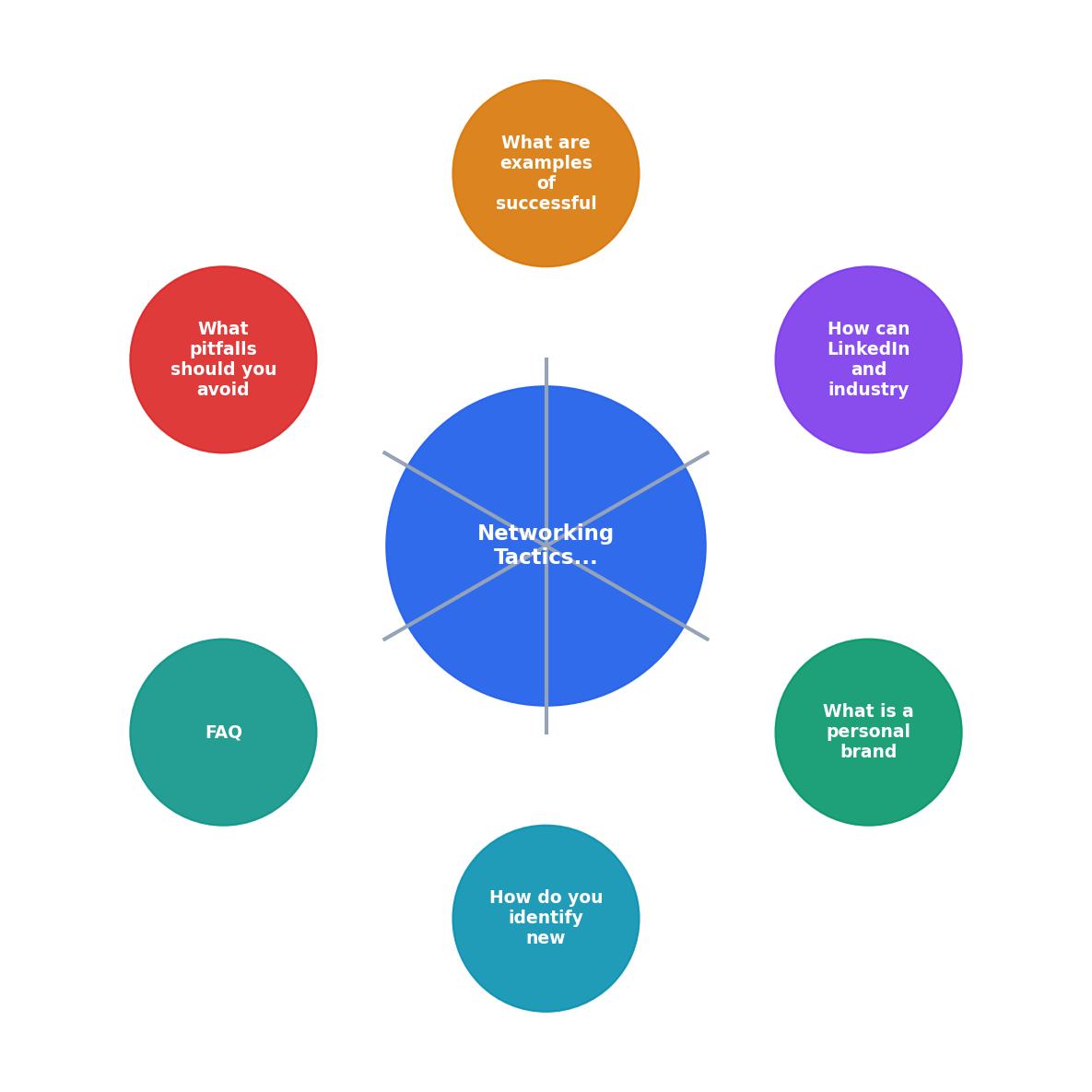
The process diagram above shows the flow: Identify Contacts, Craft Narrative, Engage Online, Attend Events, Follow Up, and Share Resume. Each step feeds the next. Skipping straight to Share Resume without the earlier steps is why most cold outreach fails.
Only about 40% of LinkedIn users actively engage each week. That means consistent activity puts you ahead of the majority. Even 15 minutes a day of commenting, connecting, and sharing compounds quickly.
Real career transitions through networking

Concrete examples help more than abstract advice. Here are three patterns that repeat across successful career transitions:
Pattern 1: The alumni connection. A former high school teacher wanted to move into corporate learning and development. She searched her university's alumni directory, found a Director of L&D at a Fortune 500 company, and sent a short, specific message. That conversation led to an informational interview, which led to a referral for an open Instructional Designer role. She tailored her resume using Resume Hedgehog to match the job description's exact terminology, submitted it through the referral link, and got an interview within a week.
Pattern 2: The meetup regular. A software developer transitioning to product management attended the same local ProductTank meetup three months in a row. By the third event, organizers knew his name. When a startup founder mentioned needing a PM who understood engineering trade-offs, two people in the room pointed at him. He never formally "applied."
Pattern 3: The LinkedIn content creator. A military veteran documented her transition to cybersecurity on LinkedIn. She posted weekly about certifications she was earning (CompTIA Security+, then CySA+), lessons from military operations that applied to incident response, and honest reflections on the challenges. A CISO at a mid-size firm saw one of her posts, checked her profile, and reached out directly.
| Cold Application | Networked Application |
|---|---|
| Resume screened by ATS only | Resume reviewed by a human advocate |
| No context for career change | Narrative explained by referrer |
| 2-5% interview rate | 10-20%+ interview rate |
| Weeks of silence | Faster feedback loop |
Pitfalls to avoid in transition networking
Networking during a career change has specific traps that do not apply to standard job searches:
- Leading with "I need a job." This puts pressure on the other person immediately. Lead with curiosity instead. Ask about their work, their industry, their path. The job conversation happens naturally.
- Sending your old resume. If your resume still reads like your previous career, do not share it. Tailor it first. A resume that screams "marketing manager" when you are targeting data analytics roles confuses the person you are asking for help.
- Networking only when desperate. The best time to build relationships is before you need them. If you start networking the week you get laid off, every interaction carries a whiff of urgency that makes people uncomfortable.
- Ignoring follow-up. Meeting someone at an event means nothing if you do not follow up within 48 hours. A short LinkedIn message referencing your conversation keeps the connection alive.
- Targeting only hiring managers. Peers, individual contributors, and even people one level below your target role can be more accessible and equally helpful. They often know about openings before they are posted.
- Being vague about what you want. "I'm open to anything" is not helpful. "I'm targeting UX research roles at B2B SaaS companies" gives people something concrete to work with.
Personal brand narrative template
Use this checklist to build your own narrative before your next networking conversation or LinkedIn update:
Personal Brand Narrative Builder
Your progress is saved automatically in your browser.
Only about 60% of career changers customize their narrative for each target role. The other 40% use a one-size-fits-all pitch and wonder why conversations stall. Tailoring your resume to each job description with a tool like Resume Hedgehog takes minutes and ensures the language on paper matches the story you tell in person.
FAQ
Frequently Asked Questions
What was the single most effective networking move you made during your own career transition? Share it below so others can learn from your experience.
Additional Resources
- Making a career change? | Adrienne Tom - Here's what really works when writing a career change resume 1. Use a hybrid or functional format—highlight your skills first, then your work ...
- Resume Examples for Making a Career Change (Plus Tips) - When writing a resume for a career change, emphasize the transferable skills and experiences you've acquired throughout your career.
- How to Write a Career Change Resume - Template - Wharton - 1. Craft a resume objective · 2. Include a skills summary · 3. Focus on the most relevant work experience · 4. Highlight your education (including certificates) · 5 ...

Get the 356 complete recruitment audit (free PDF)
Download the free PDF with 356 reasons hiring stalls, plus optional daily email tips. No credit card.
Get the free PDF 356 reasons · Free download