Using Your Resume to Predict Interview Questions for Entry-Level Positions
You spent hours building your resume, sent it off, and now you have an interview scheduled. The problem is you have no idea what they will ask. Here is the thing most new graduates miss: your resume is a script the interviewer will follow. Every bullet point, every listed skill, every internship title is a prompt for a specific question, and you can reverse-engineer those questions before you walk into the room.

You spent hours building your resume, sent it off, and now you have an interview scheduled. The problem is you have no idea what they will ask. Here is the thing most new graduates miss: your resume is a script the interviewer will follow. Every bullet point, every listed skill, every internship title is a prompt for a specific question, and you can reverse-engineer those questions before you walk into the room.
Photo by EqualStock IN from Pexels
TL;DR:- Every resume element (coursework, internships, skills, projects) generates predictable interview questions.
- Map each bullet point to a likely question, then draft a concise answer using the STAR method.
- Prepare for gap and weakness questions by reframing them with evidence already on your resume.
- A tailored, job-matched resume makes prediction even easier because it mirrors the job description.
Your resume is the interviewer's cheat sheet
Interviewers at the entry level rarely improvise. They open your resume, scan it top to bottom, and pull questions directly from what they see. A line about "Python data analysis" becomes "Tell me about a project where you used Python." A listed internship at a marketing agency becomes "What did you learn during your time at that agency?"
This means preparation is not guesswork. It is pattern matching. Go through your resume line by line and ask yourself: If I were hiring someone and saw this, what would I want to know? Write those questions down. You now have a rough interview script.
The remaining questions tend to be behavioral or situational, but even those connect back to your listed experiences. An interviewer asking "Tell me about a time you handled conflict" expects you to pull from something on the page in front of them.
Identify key resume elements

Not every resume section generates the same type of question. Here is how to categorize what you have:
- Coursework and academic projects trigger "What did you learn?" and "How did you apply it?" questions. If you listed a capstone project, expect to walk through it step by step.
- Internships and part-time jobs generate "What was your role?" and "What results did you achieve?" questions. Even a summer retail job can prompt questions about teamwork and customer handling.
- Technical skills lead to direct competency checks. Listed Excel? They might ask you to describe a pivot table scenario. Listed JavaScript? Expect a question about a specific feature you built.
- Extracurriculars and volunteer work prompt questions about leadership, initiative, and time management.
- Certifications invite "Why did you pursue this?" and "How have you applied it?"
Common entry-level questions
Here are questions that come up repeatedly in entry-level interviews, organized by what triggers them on your resume:
From your education section:- What was your favorite course and why?
- Describe a group project. What was your contribution?
- How does your degree prepare you for this role?
- Walk me through your internship responsibilities.
- What was the biggest challenge you faced at [company]?
- Describe a time you received critical feedback.
- How proficient are you in [specific tool]?
- Give me an example of using [skill] to solve a problem.
- What skill are you currently working to improve?
- Tell me about a time you worked under a tight deadline.
- Describe a situation where you had to learn something quickly.
- How do you prioritize when everything feels urgent?
"If the role is 70% repetitive data entry and they say repetition drains them, that's useful information for both of you.">, 40 entry
That quote cuts both ways. The interviewer is checking fit, and your resume signals what kind of work you are comfortable with. Make sure the signals match the role.
Craft answers from resume content

The STAR method (Situation, Task, Action, Result) works well for entry-level candidates because it forces structure onto experiences that might otherwise sound vague.
Take a resume bullet like: "Assisted marketing team with social media content creation during summer internship."
- Situation: The marketing team needed to increase Instagram engagement for a product launch.
- Task: I was responsible for drafting three posts per week and tracking engagement metrics.
- Action: I researched competitor accounts, proposed a new content calendar, and A/B tested caption styles.
- Result: Engagement increased 22% over six weeks.
Here is the process at a glance for turning your resume into interview preparation:
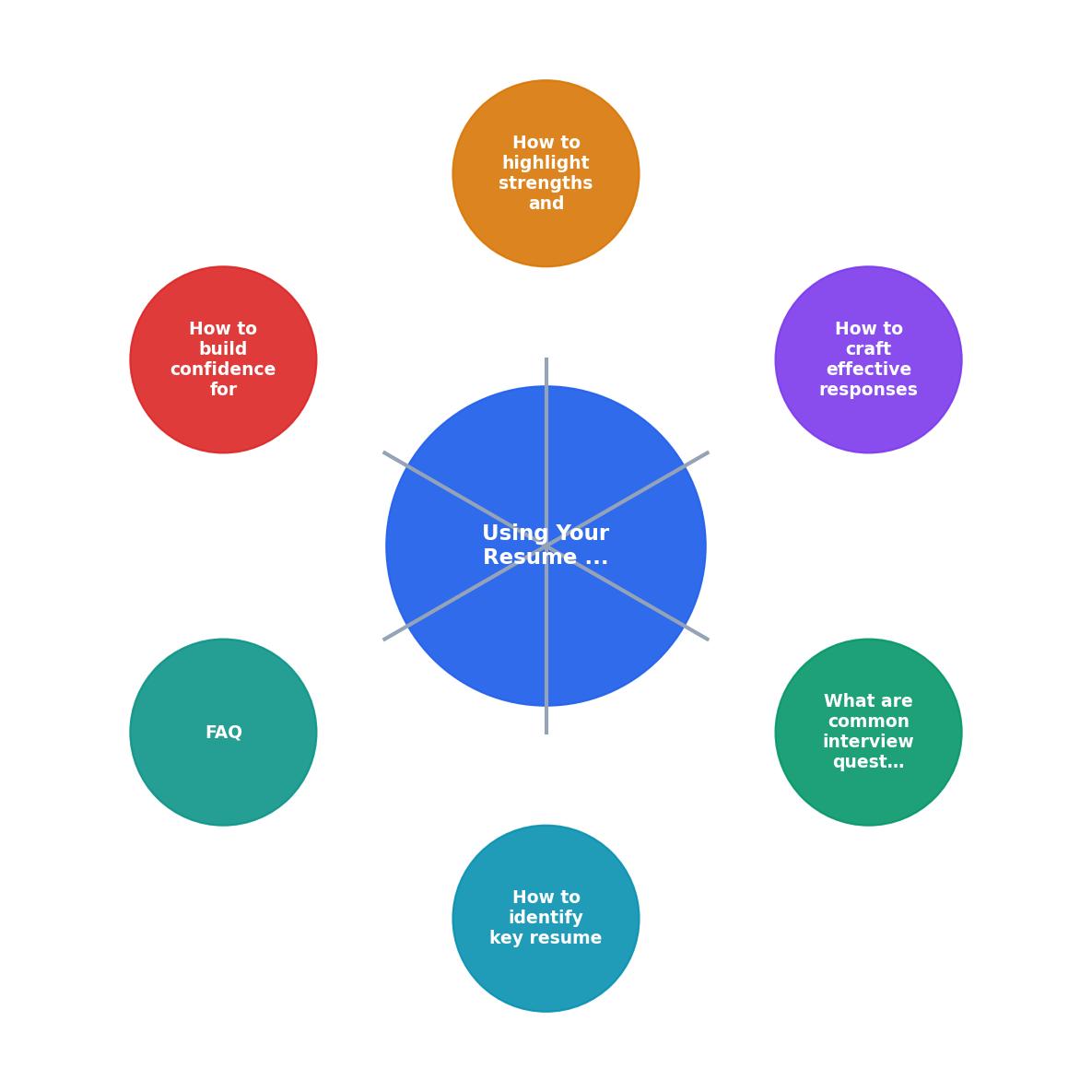
Follow the steps in the diagram: Review resume, Map elements to questions, Draft STAR answers, Practice aloud, Refine and repeat. Each step builds on the previous one.
Highlight strengths, address gaps

Entry-level resumes often have gaps or thin sections. Interviewers notice. The trick is not to hide weaknesses but to reframe them using evidence you already have.
Limited work experience? Point to academic projects, volunteer roles, or freelance work listed on your resume. A class project where you built a database is real experience, even if nobody paid you for it.
Short employment stints? If your resume shows a three-month internship, prepare to explain what you accomplished in that time. Density of impact matters more than duration.
No direct industry experience? Connect transferable skills from what is on your resume. Customer service teaches communication. Tutoring teaches patience and explanation. Retail teaches working under pressure.
Skills you listed but barely used? Be honest about your proficiency level. Saying "I have foundational knowledge in SQL and I am actively building on it through online courses" is far better than bluffing through a technical question.
| Weak Answer | Strong Answer |
|---|---|
| "I don't have much experience." | "My capstone project involved building a full data pipeline from scratch." |
| "I'm a fast learner." | "During my internship, I learned Tableau in two weeks to deliver a client dashboard." |
| "I work well in teams." | "In my senior project, I coordinated four team members across different time zones." |
| "I'm strengthening my public speaking by presenting at campus meetups." |
Build interview confidence
Confidence comes from preparation, not personality. Here is what actually works:
- Mock interviews using your question list. Grab a friend or use a mirror. Answer each predicted question out loud. Written answers sound different when spoken.
- Record yourself. Listen for filler words, pacing, and clarity. Adjust.
- Time your answers. Aim for 60 to 90 seconds per behavioral answer. Longer than two minutes and you lose the interviewer.
- Prepare your "tell me about yourself" answer last. It should be a 60-second summary that connects your resume highlights to the specific role.
The following interactive card shows how a typical entry-level candidate might map their resume sections to predicted questions. Use it as a mental model for your own preparation.
Resume Section → Predicted Question
Resume-to-Interview Preparation Checklist
Your progress is saved automatically in your browser.
FAQ
Frequently Asked Questions
What is the one resume bullet point you are most nervous about being asked to explain? That is the one to prepare for first.
Additional Resources
- Common Interview Questions for Entry-Level Positions - Discover a list of questions that you might be asked during an interview for an entry-level position as well as some sample answers to a few ...
- 40 entry-level interview questions that reveal fit - Truffle - The standard entry-level playbook goes something like this: “Tell me about yourself.” “What are your strengths and weaknesses?” “Where do you see yourself in ...
- The Best Interview Questions To Ask Entry-Level Job Seeker - Can you tell me about yourself? Starting with an open-ended question allows the candidate to introduce themselves and provide a brief overview ...

Get the 356 complete recruitment audit (free PDF)
Download the free PDF with 356 reasons hiring stalls, plus optional daily email tips. No credit card.
Get the free PDF 356 reasons · Free download