Prioritizing Skills and Achievements in a Healthcare Resume
Your healthcare resume lands in front of an ATS scanner before any recruiter sees it. If your skills and achievements don't align with what that scanner is programmed to find, you never make it past the filter. Healthcare hiring is competitive, clinics, hospitals, and health systems receive hundreds of applications for a single position. The difference between getting an interview and getting ghosted often comes down to whether your resume speaks the language the job posting uses, backed by concrete, measurable proof of what you've accomplished.

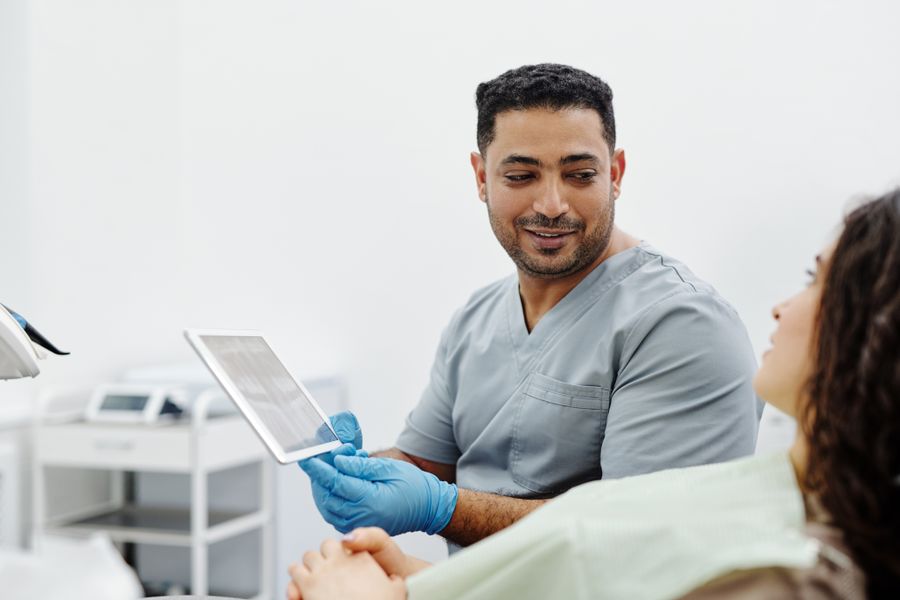
Photo by cottonbro studio from Pexels
Your healthcare resume lands in front of an ATS scanner before any recruiter sees it. If your skills and achievements don't align with what that scanner is programmed to find, you never make it past the filter. Healthcare hiring is competitive, clinics, hospitals, and health systems receive hundreds of applications for a single position. The difference between getting an interview and getting ghosted often comes down to whether your resume speaks the language the job posting uses, backed by concrete, measurable proof of what you've accomplished.
TL;DR:- Identify core skills for your specific healthcare role and match them directly to job posting keywords.
- Quantify achievements with metrics (patients helped, time saved, error reduction) rather than vague statements.
- Tailor your skills and accomplishments for each application to maximize ATS visibility and recruiter interest.
- Use the right terminology: "Electronic Health Records (EHR)" instead of "computer skills"; "medication reconciliation" instead of "organizing meds."
Why healthcare resumes need a different approach
Healthcare roles demand both hard clinical skills and soft interpersonal abilities. A nurse practitioner's resume needs to showcase diagnostic capabilities, knowledge of protocols, and patient communication equally. A medical coder must prove accuracy and speed alongside familiarity with specific coding systems. A respiratory therapist needs to demonstrate technical competency with equipment while also showing crisis management and teamwork.
The problem: most resumes lump all of this together without prioritizing. They list "strong communication" and "attention to detail" generically, the same way a retail manager might. Healthcare employers and ATS systems are looking for specificity, evidence that you can do the actual work, not just that you have generic professional traits.
When your resume doesn't match the job description's language and structure, the ATS filters you out before anyone reads a word. Studies show that roughly 78% of resumes are rejected at the screening stage, often because they don't contain the keywords and achievement metrics the hiring system is programmed to find. In healthcare, where regulatory compliance and patient safety are non-negotiable, that misalignment is costly.
What skills are essential for healthcare resumes?

Different healthcare roles require different skill sets, but they often fall into overlapping categories. Start by identifying which are actually relevant to your target position.
Clinical and technical skills:- Electronic Health Records (EHR) systems: Epic, Cerner, Athena, NextGen
- Medication administration and pharmacology
- Diagnostic procedures: ECG, spirometry, venipuncture, IV therapy
- Infection control and sterilization protocols
- CPR, BLS, ACLS certification levels
- Specific specialties: orthopedics, cardiology, emergency medicine, oncology
- Laboratory techniques and specimen collection
- Wound care and dressing management
- HIPAA regulations and patient confidentiality
- Medical coding: ICD-10, CPT, HCPCS
- Quality assurance and risk management
- Incident reporting and adverse event tracking
- Patient safety initiatives
- Regulatory compliance documentation
- Patient education and counseling
- Interdisciplinary team collaboration
- Crisis de-escalation and difficult patient management
- Documentation and charting accuracy
- Workflow optimization and process improvement
"Most health care professionals understand the importance of compassion and empathy when supporting or treating patients.">, Health Care Resume Skills: What to Include (+ Examples)
Your resume should reflect that empathy through concrete examples, not platitudes. When you pull a job description apart, highlight every technical term and clinical responsibility mentioned. Those are the skills the ATS is filtering for. Match them directly in your resume.
How to quantify achievements in healthcare

The most common mistake in healthcare resumes is vague achievement statements. "Improved patient outcomes" means nothing. "Reduced hospital-acquired infection rates by 18% through protocol standardization" means something. Metrics turn abstract accomplishments into proof.
Metrics that matter in healthcare:
Patient volume and throughput:- Managed care for 40+ patients per shift
- Reduced average patient wait time from 45 minutes to 18 minutes
- Increased clinic efficiency to 22 patients per day (vs. 16 previously)
- Achieved 100% medication reconciliation accuracy over 18 months (300+ reconciliations)
- Reduced medication errors by 34% through implementation of double-check protocol
- Zero never-events recorded during tenure
- Maintained 99.2% EHR charting accuracy across 500+ daily records
- Achieved 100% HIPAA compliance audits for three consecutive years
- Completed all required continuing education and recertifications on schedule
- Reduced supply waste by 22% through inventory optimization
- Identified $45K in annual savings by consolidating vendor contracts
- Decreased overtime costs by 16% through improved scheduling
- Trained 12 new nurses on EHR workflows, reducing their onboarding time by 40%
- Mentored 3 nursing students through clinical practicum
- Developed educational materials for 500+ patients on chronic disease management
- Redesigned medication delivery workflow, cutting preparation time by 25%
- Led cross-functional team to implement new triage system, reducing bottlenecks
- Spearheaded transition to new EHR system with 95% staff adoption in first month
Research shows that 68% of healthcare hiring managers and recruiters prioritize resumes with quantified results over those with generic descriptions. The numbers grab attention because they're credible and comparable.
How to align skills with job descriptions
This is where tailoring happens. Every healthcare role you apply to will have slightly different requirements, even if the title is the same across different organizations.
Step 1: Extract keywords from the job posting
Copy the job description. Highlight every clinical skill, system, certification, responsibility, and outcome mentioned. Create a running list. For example, a posting for a Medical-Surgical Nurse might require: "proficiency with Epic EHR," "ACLS certification," "IV therapy," "wound care," "12-hour shift flexibility," "telemetry monitoring," "patient advocacy."
Step 2: Score your experience against the list
Go through your resume and resume history. Mark which of those keywords you already have evidence for. If the posting mentions "medication reconciliation" and you've done it, note it. If it mentions "ICU experience" and you're a med-surg nurse in an oncology unit, think about whether your experience is close enough to address it, or if it's a genuine gap.
Step 3: Prioritize, don't fabricate
Reorder your skills section and achievement bullets to lead with the most relevant matches. Put "Epic EHR proficiency" and "ACLS certified" near the top if that's what they want. Move less relevant skills down or remove them entirely if space is tight.
Step 4: Use their language
If the job description says "Electronic Health Records (EHR)" use that exact term, not "computer charting" or "medical software." If they say "medication reconciliation," don't just say "organized medications." Match terminology precisely, the ATS is looking for exact or near-exact matches.
Step 5: Mirror the structure (without lying)
If the job description emphasizes safety outcomes first, lead with your safety achievements. If it emphasizes patient volume, emphasize your throughput. Tailor the emphasis without changing the facts.
Examples of strong skill descriptions
Weak: "Strong organizational and time management skills."
Strong: "Managed concurrent care for 35+ patients across three units, prioritizing high-acuity cases while maintaining accurate documentation and medication administration timelines."
Weak: "Experience with EHR systems."
Strong: "Proficient in Epic EHR for charting, medication orders, lab requisitions, and clinical documentation; trained 8 new staff members on system workflows."
Weak: "Good communication with patients and families."
Strong: "Conducted discharge planning meetings with patients and families, explaining post-operative instructions and medication regimens; achieved 92% patient satisfaction scores on post-discharge surveys."
Weak: "Team player who works well with other departments."
Strong: "Collaborated with case management, respiratory therapy, and discharge planning teams on complex patient transitions; led weekly interdisciplinary rounds for high-risk patients."
Weak: "Attention to detail."
Strong: "Maintained 99.1% accuracy in medication reconciliation across 400+ patient admissions; zero medication-related adverse events recorded."
Weak: "Experienced in infection control."
Strong: "Implemented aseptic technique protocols during all invasive procedures; audited 50+ healthcare workers monthly on hand hygiene compliance; sustained 100% compliance rates."
Examples of effective achievement statements
For nurses:- Reduced patient fall rate on unit by 23% through implementation of hourly rounding protocol and environmental hazard assessment.
- Managed up to 8 high-acuity patients simultaneously while maintaining NDNQI benchmark scores above the 75th percentile.
- Achieved 100% on-time medication administration audits for 18 consecutive months across 2,000+ doses.
- Developed and delivered bedside report communication training to 20 RNs; unit adopted new process hospital-wide.
- Achieved 98.2% coding accuracy on 2,500+ claims annually; prevented $180K in denied claims through detailed claim audits.
- Reduced average claim processing time from 6 days to 3 days by optimizing workflow and implementing automated pre-billing checks.
- Maintained zero compliance violations across three external audits; ensured adherence to ICD-10 and CPT guidelines.
- Managed 40+ mechanically ventilated patients daily; participated in 3 equipment upgrade transitions with 100% successful implementation.
- Reduced equipment downtime by 32% through proactive maintenance scheduling and vendor communication protocols.
- Trained 12 staff members on new ventilator models and advanced airway management; achieved competency verification within 2 weeks.
- Processed 60+ patient check-ins daily while maintaining accurate demographic and insurance verification; reduced claim rejections by 15%.
- Assisted with 500+ clinical procedures annually, including phlebotomy, EKG, and specimen collection, with zero patient incidents.
- Maintained clinic supply inventory and equipment calibration logs; prevented stockouts and ensured 100% regulatory compliance audits.
- Implemented new scheduling system, reducing overtime costs by $120K annually while improving staff satisfaction scores by 18%.
- Coordinated joint commission accreditation readiness; facility achieved full accreditation with zero deficiencies in compliance areas.
- Managed staff credentialing and recertification tracking for 150+ providers; maintained 100% compliance with state and federal requirements.
Aligning skills and achievements visually
Here's how the prioritization process flows from job posting to tailored resume:
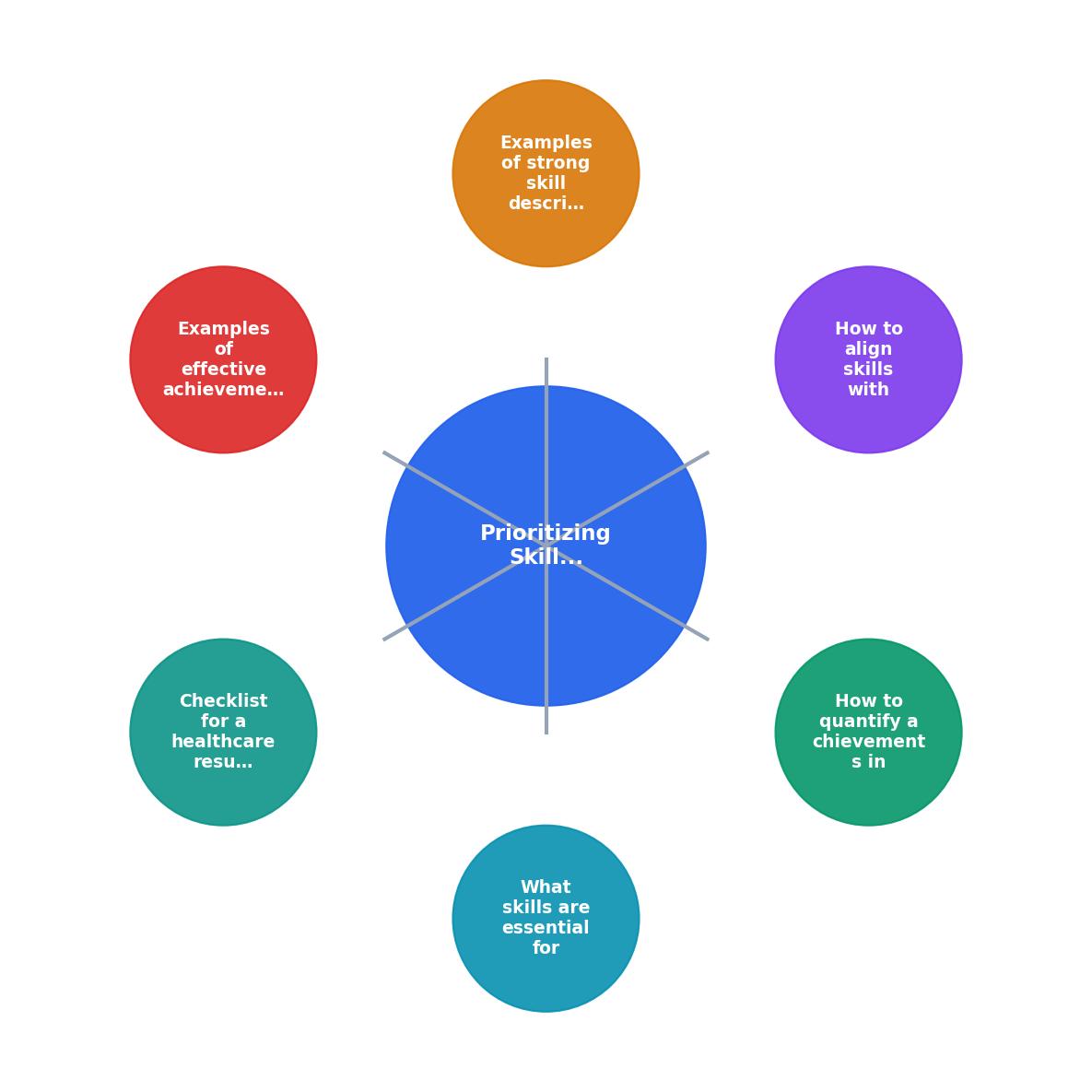
The diagram shows: Extract keywords → Score your fit → Prioritize matches → Reorder resume → Tailor language. Each step narrows your resume from a broad document to a tightly focused match for that specific role.
Resume Skills Alignment Example
This interactive card shows how a nurse's core competencies might align with a typical med-surg posting. Each checkmark represents a skill that directly appeared in the job description, exactly the kind of alignment that gets you past the ATS filter. Your resume should reflect these matches in your skills section and back them up with quantified achievements in your work history.
Checklist for a healthcare resume
Healthcare Resume Priority Checklist
Your progress is saved automatically in your browser.
FAQ
Frequently Asked Questions
Healthcare resumes compete in a crowded field. The difference between getting lost in the pile and landing an interview often comes down to alignment, making sure your resume speaks the hiring system's language and proves your value with concrete metrics. Take the time to tailor each application. Extract the keywords. Quantify your impact. Lead with your strongest matches. That discipline pays off in call-backs.
Additional Resources
- Health Care Resume Skills: What to Include (+ Examples) - How to include health care skills on your resume · 1. Include skills relevant to the position. · 2. Mention skills in your professional summary.
- 4 Tips to Create a Compelling Healthcare Resume - Highlight achievements. Think back over your work history and brainstorm times you have used your healthcare skills to create value for your employer. These ...
- How To Write a Healthcare Resume (With Example and ... - Learn what a healthcare resume is, find out how to write one in seven steps, review helpful tips and use a template and an example to guide ...

Get the 356 complete recruitment audit (free PDF)
Download the free PDF with 356 reasons hiring stalls, plus optional daily email tips. No credit card.
Get the free PDF 356 reasons · Free download