Resume optimization guide #14: resume hog brand search intent
When you apply to a job, your resume hits an ATS (Applicant Tracking System) before it ever reaches a human recruiter. That system scans for specific keywords, phrases, and brand language tied to the role, company, and industry. If your resume doesn't speak the recruiter's language, it gets filtered out, no matter how qualified you are. Resume optimization goes beyond generic tweaks, it means understanding and embedding the exact search intent and brand terminology that hiring teams use to find

When you apply to a job, your resume hits an ATS (Applicant Tracking System) before it ever reaches a human recruiter. That system scans for specific keywords, phrases, and brand language tied to the role, company, and industry. If your resume doesn't speak the recruiter's language, it gets filtered out, no matter how qualified you are. Resume optimization goes beyond generic tweaks, it means understanding and embedding the exact search intent and brand terminology that hiring teams use to find candidates like you.
TL;DR:- ATS systems filter resumes based on industry-specific keywords and job-title terminology before recruiters see them
- Brand search intent refers to the language, tools, frameworks, and certifications a hiring team actively searches for when screening candidates
- Tailor your resume to match the job description's exact terminology, metrics focus, and tool stack, not just general skills
- Use tools like job posting analysis and Resume Hedgehog to identify and embed the right keywords in context
- Test your resume against multiple job postings in your target role to ensure keyword strength
This guide walks you through identifying brand search intent for your target role, embedding it authentically into your resume, and using tools to verify your keywords land.
What is brand search intent?

Brand search intent is the specific language, tools, methodologies, and credentials that hiring teams use to filter candidate pools. It's not just "marketing" or "software engineer", it's "HubSpot marketing automation," "React TypeScript," or "AWS Solutions Architect certified."
When a recruiter posts a job description, they embed signals:- Tools and platforms: Salesforce, Google Analytics, Figma, Python, AWS, Jira
- Methodologies and frameworks: Agile, Scrum, Design Thinking, OKRs, SDLC
- Certifications and standards: AWS, GCP, PMP, CISSP, Six Sigma
- Industry jargon: "full-stack," "cross-functional leadership," "data-driven decision making"
- Metrics and outcomes: "improved conversion by 25%," "reduced deployment time," "scaled infrastructure for 10x growth"
Why generic resumes fail
Generic resumes sound competent but invisible to ATS systems. They use broad, inflated language instead of the concrete terminology hiring teams scan for.
Generic version: "Managed marketing campaigns across digital channels, driving engagement and brand awareness."
Optimized version: "Led 12 multi-channel email campaigns in Mailchimp and Salesforce, achieving 18% open rate and 3.2% click-through rate; used Google Analytics to A/B test landing pages, lifting conversion by 9%."
The second version:- Names specific tools (Mailchimp, Salesforce, Google Analytics)
- Includes measurable outcomes (18%, 3.2%, 9%)
- Uses industry terminology (A/B test, conversion, multi-channel)
- Matches keywords a recruiter would search for ("email campaigns," "Google Analytics," "conversion")
Many job seekers don't realize that ATS systems reject resumes based on keyword mismatch before a recruiter ever sees them. If you're not using the exact terminology the hiring team is looking for, your resume disappears.
How to identify brand search intent for your target role

Step 1: Collect job postings in your target role
Start by gathering 5-10 recent job postings for the role you're targeting. Use LinkedIn, Indeed, Glassdoor, and industry-specific job boards. Save them locally or copy them to a document.
The variety matters. A "Product Manager" role at a fintech startup differs from a product manager role at an e-commerce platform. Both are product managers, but the keyword footprint is different.
Step 2: Extract keyword clusters
Read each posting and mark patterns. Look for:- Tool and platform names (explicitly mentioned in requirements)
- Methodologies (phrases like "Agile," "data-driven," "cross-functional")
- Certifications (nice-to-have or required)
- Outcome language (words like "scaled," "optimized," "reduced," "increased")
- Niche terminology (industry-specific terms that only insiders use)
- Tools: SQL, Python, Tableau, Power BI, Google Analytics, R
- Methodologies: "statistical analysis," "data visualization," "A/B testing"
- Outcomes: "built dashboards," "identified trends," "reduced reporting time"
Step 3: Identify priority keywords
Rank keywords by frequency and relevance:- Tier 1 (must-have): Appears in 80%+ of postings or is a core requirement
- Tier 2 (strong-to-have): Appears in 50-79% or is a nice-to-have
- Tier 3 (differentiators): Appears in 30-49% or is specialized
Step 4: Map keywords to your achievements
Don't just list keywords. Weave them into achievement statements that are also true.
Weak: "Proficient in SQL and Python."
Strong: "Built automated data pipelines using Python and SQL, reducing manual reporting time by 8 hours per week across 12 stakeholders."
The second version:- Names the tools
- Shows outcome (time saved)
- Implies scale (12 stakeholders)
- Uses context (automated, pipeline, reporting)
Building your optimized resume

Audit your current resume
Go through your resume line by line. For each role or achievement, ask:- Does this mention specific tools, platforms, or methodologies?
- Are there generic words that could be replaced with industry terminology?
- Do I include metrics that matter (percentages, dollar amounts, time saved)?
- Would a recruiter recognize the language I'm using?
- Vague. What tools? What metrics? What does "improved" mean?
- Now you've named tools, stated metrics, and implied outcome (conversion).
Rewrite achievement statements with brand language
Take your top 8-12 achievements (the ones most relevant to your target role) and rewrite them using keywords from your Tier 1 and Tier 2 lists.
Format: Action verb + tool/methodology + outcome + metric
Examples:
- "Managed 5 SaaS integrations (Stripe, Salesforce, Zapier) to streamline payment reconciliation, reducing manual data entry by 6 hours per month."
- "Led cross-functional team using Agile/Scrum ceremonies (sprint planning, retrospectives, standups) to deliver Q3 product roadmap 2 weeks ahead of schedule."
- "Designed mobile-first UI in Figma using design tokens and accessibility standards (WCAG 2.1), reducing accessibility audit issues by 94%."
Optimize your skills section
Don't just list skills alphabetically. Group them by category and prioritize Tier 1 keywords:
Better skills section for a Data Analyst:
Core Analytics & Visualization: SQL, Python, Tableau, Google Analytics, Power BI
Statistical Methods: Hypothesis testing, A/B testing, regression analysis
Data Platforms: Google BigQuery, AWS S3, Apache Spark
Tools & Productivity: Excel (VLOOKUP, pivot tables, macros), Git, Looker
This structure helps the ATS parse your strengths and makes it easier for recruiters to scan.
When you systematically add brand search intent keywords to your resume and test them against real job postings, your match rate typically jumps 15-25%, meaning more resumes pass the ATS stage and reach human recruiters.
Tools and workflows to verify and refine
Use Resume Hedgehog to test alignment
Upload your resume and paste a job description into Resume Hedgehog. It analyzes your resume against the specific job posting and flags missing keywords, recommends rewording, and shows you exactly which terms appear in the posting but not in your resume.
This is a fast feedback loop. You see in real time whether your resume speaks the job's language. Adjust, retest, and iterate.
Check keyword density with simple tools
Paste your resume into a free keyword density checker (like Jason.com or Wordcloud). See which terms appear most frequently. If you're targeting a "Python Developer" role and "Python" appears only once in your resume, that's a red flag.
Aim for:- Primary keywords (tool/role-specific): 3-5 mentions across the full resume
- Secondary keywords (methodologies, outcomes): 2-3 mentions
- Avoid: Keyword stuffing (listing skills in paragraphs repeatedly, it looks robotic and kills readability)
Test against multiple postings
Don't optimize for one posting. Gather 5 postings for your target role and check your resume against each. If it aligns well with 4 out of 5, you've got strong keyword coverage. If it aligns with only 2, you need to add more breadth.
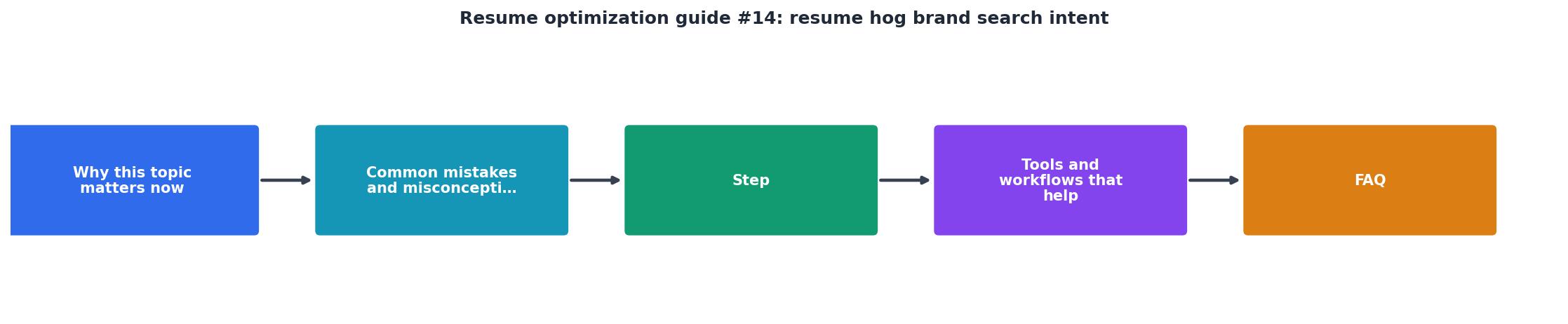
Resume optimization at a glance
The expert insight on keyword specificity
"Instead of writing 'Managed a database', you should write 'Optimized SQL database performance, reducing data retrieval time by 15%'.">, How to Find the Exact Resume Keywords Employers Want
This principle is at the heart of brand search intent. Recruiters and ATS systems are looking for specificity and proof, not generic capability.
Common mistakes and fixes
Mistake 1: Assuming generic = universal- Wrong: "Experienced in marketing"
- Right: "Managed SEM campaigns in Google Ads and Microsoft Ads, achieving 2.8% conversion rate and 18% YoY revenue growth"
- Wrong: "Worked with databases and dashboards"
- Right: "Built real-time dashboards in Tableau and Power BI connected to SQL Server; tracked 40+ KPIs for executive team"
- Wrong: "Improved team efficiency"
- Right: "Reduced deployment cycle time by 60% by introducing CI/CD pipeline (Jenkins, GitLab); enabled 3x faster release velocity"
- Wrong: Posting says "SEO-driven growth," your resume says "website optimization"
- Right: Mirror the posting's exact phrasing when it aligns with your experience
Brand Search Intent Checklist
This interactive reference shows what a fully optimized resume looks like in terms of keyword coverage and metric density. Use it as a benchmarking tool as you refine your own resume.
Resume Brand Search Intent Optimization Checklist
Your progress is saved automatically in your browser.
FAQ
Frequently Asked Questions
The difference between a resume that gets lost in the ATS and one that reaches a human recruiter often comes down to one thing: speaking the hiring team's language. Brand search intent isn't about lying or exaggerating. It's about translating your real experience into the exact terminology hiring teams are listening for. Once you understand what they're searching for, your resume becomes findable.
Additional Resources
- How to Find the Exact Resume Keywords Employers Want - You need a data-driven approach to keyword optimization. Here is the secret: Applicant Tracking Systems (ATS) do not care about fancy buzzwords.
- The Hog Report | Career Intelligence from ResumeHog - Learn how to optimize your resume for the 2026 job market by focusing on applied AI skills, avoiding jargon, and understanding the latest ATS technology.
- Resume Keywords: How to Find the Right Ones & Use ... - This guide shows you how to find the right resume keywords, place them strategically, and use semantic context to maximize your ATS score in 2026.
Can't find a job? We'll check your resume for free
Upload or paste your resume on our home page. Get a quality score and clear fixes in minutes. No signup required to start.
Check my resume free Free AI score · No signup to start