Reframing Your Resume for a Teaching Position After a Career Break
Returning to the workforce after a career break can be daunting, especially when aiming for a teaching position. The key is to transform your resume into a effective tool that highlights your past teaching experience, addresses career gaps positively, and showcases any volunteer work or continuing education. By integrating your career break into a cohesive professional narrative, you can effectively present yourself as a strong candidate for a teaching role.


Returning to the workforce after a career break can be daunting, especially when aiming for a teaching position. The key is to transform your resume into a effective tool that highlights your past teaching experience, addresses career gaps positively, and showcases any volunteer work or continuing education. By integrating your career break into a cohesive professional narrative, you can effectively present yourself as a strong candidate for a teaching role.
Photo by Anna Tarazevich from Pexels
TL;DR: Reframe your resume for a teaching role post-career break by emphasizing past teaching experience, addressing gaps positively, and highlighting relevant volunteer work or education. Integrate a career break into a cohesive professional narrative.
Reframing your resume after a career break involves more than just updating dates and job titles. It requires a strategic approach to highlight your skills and experiences in a way that aligns with current teaching demands. Whether you've been away for personal reasons, further education, or other pursuits, this guide will help you craft a resume that stands out to hiring committees.
How to Present Past Teaching Experience Effectively

When returning to teaching, it's crucial to present your past teaching experience in a compelling manner. Start by highlighting key achievements and responsibilities that align with the job you are applying for. Use specific examples to demonstrate your impact in previous roles.
- Quantify achievements: Instead of saying you "improved student engagement," specify that you "increased student engagement by 30% through innovative lesson plans." This not only provides evidence of your effectiveness but also showcases your ability to implement strategies that yield tangible results.
- Use action verbs: Words like "developed," "implemented," and "facilitated" make your contributions clear and dynamic. Action verbs help paint a vivid picture of your proactive role in the classroom and your ability to drive change.
- Focus on relevant skills: Tailor your experience to match the required skills in the job description, such as classroom management or curriculum development. Consider what specific competencies are most valued in the teaching position you are targeting and emphasize those.
How to Address Career Gaps Positively
Addressing career gaps can be challenging, but with the right strategies, you can turn them into strengths.

- Be honest: A straightforward explanation shows integrity. Whether it was for family, health, or personal growth, honesty is appreciated. Employers understand that life circumstances can lead to breaks in employment and value transparency.
- Highlight growth: Use this section to discuss any skills you developed during the break. Did you take any courses, volunteer, or engage in professional development? Perhaps you gained experience in educational technology, which is increasingly crucial in modern classrooms.
- Integrate the break: Present it as a part of your career journey, demonstrating how it has enriched your perspective and skills as a teacher. Consider framing your break as a period of learning and growth, which has equipped you with a broader understanding of diverse learning environments.
How to Highlight Volunteer Work and Continuing Education
Volunteer work and continuing education are crucial elements that can enhance your resume. They demonstrate your commitment to keeping skills sharp and staying engaged with the educational field.

- List relevant volunteer roles: Include positions where you've tutored, mentored, or assisted in educational settings. These roles can be particularly valuable if they involved working with diverse student populations or implementing educational programs.
- Mention courses and certifications: Online courses, workshops, and certifications can show your dedication to professional growth. For example, certifications in special education, ESL, or digital literacy can be particularly attractive to schools.
- Integrate these into your narrative: Describe how these experiences have prepared you for the role you are seeking. Discuss specific skills or insights gained that are directly applicable to the classroom, such as new teaching methodologies or technological proficiencies.
Sample Resume Section for Teaching Resumes Post-Break
Here's a practical example to demonstrate how to effectively frame your teaching resume after a career break:
Sample Resume Section for Teaching Resumes Post-Break
Your progress is saved automatically in your browser.
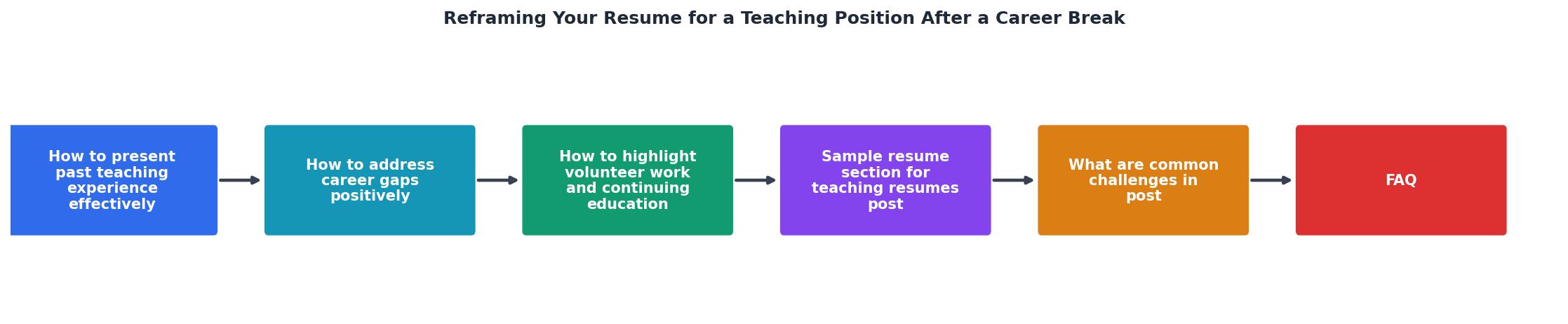
What Are Common Challenges in Post-Break Resumes?
Re-entering the workforce can pose several challenges, but understanding and addressing them can make the transition smoother.
- Outdated skills: Address this by highlighting any efforts to update your skills through courses or self-study. Consider mentioning any new teaching tools or technologies you have mastered during your break.
- Lack of recent experience: Emphasize relevant volunteer work or part-time roles. These experiences can serve as a bridge back into full-time teaching, demonstrating your continued engagement with education.
- Confidence: Focus on your strengths and how your unique journey enriches your teaching capability. Reflect on the diverse experiences and perspectives you bring to the classroom, which can be invaluable to students.
Key takeaway: Integrating your career break into your resume narrative can transform perceived gaps into strengths that showcase your growth and readiness for a teaching position.
FAQ
Frequently Asked Questions
Have you faced challenges in reframing your resume after a career break? Share your experiences in the comments!
Additional Resources
- Resume Samples Following a Career Break - Discover effective strategies for updating your resume after taking a career break by following these instructions and reviewing career ...
- How to Explain a Career Break in a Cover Letter - USC Online - When addressing a career break in your cover letter, there is a core tenet you should follow: Keep it short and sweet.
- How to Update your Resume after a Career Break (Step by ... - First: Reframe What a Career Break Means on a Resume · Step 1: Decide What Kind of Role you're Targeting · Step 2: List your Career Break Honestly · Step 3: ...

Get the 356 complete recruitment audit (free PDF)
Download the free PDF with 356 reasons hiring stalls, plus optional daily email tips. No credit card.
Get the free PDF 356 reasons · Free download