Showcasing Transferable Skills in a Marketing Resume
You spent years building expertise in one field, and now you want to break into marketing. The problem is your resume still reads like a document from your old career, and hiring managers skim it for about six seconds before deciding you lack direct experience. The fix is not starting over but translating what you already know into the language marketing teams actually use.

You spent years building expertise in one field, and now you want to break into marketing. The problem is your resume still reads like a document from your old career, and hiring managers skim it for about six seconds before deciding you lack direct experience. The fix is not starting over but translating what you already know into the language marketing teams actually use.

- Marketing hiring managers value communication, project management, data analysis, and stakeholder engagement regardless of where you learned them.
- Reframe every bullet on your resume around marketing functions like campaign execution, audience research, or content creation.
- Use specific action verbs and measurable results to prove you already operate like a marketer.
The skills marketing teams actually want
Most job postings for marketing roles repeat the same core competencies. If you strip away the industry-specific jargon, the underlying skills are ones you likely already have. Here are the transferable skills that show up most frequently in marketing job descriptions:
- Communication (written and verbal): crafting messages, presenting to stakeholders, writing reports
- Project management: coordinating timelines, managing budgets, keeping cross-functional teams aligned
- Data analysis: interpreting metrics, building reports, making decisions based on numbers
- Stakeholder management: working with clients, vendors, or internal leadership
- Creative problem-solving: developing new approaches when existing ones stop working
- Budget management: allocating resources, tracking spend, optimizing ROI
A teacher who designed lesson plans for 150 students already knows audience segmentation. A project coordinator who tracked deliverables across five departments already understands campaign management. The skill exists. The label just needs to change.
"At Citizens, we believe your career journey is uniquely yours - and that includes the skills you bring with you.">, Ultimate Guide to Transferable Skills for Resumes
Map your experience to marketing functions

The gap between your old role and a marketing position is usually a vocabulary gap, not a skills gap. Here is how to bridge it:
- List your daily tasks from your previous role. Be specific. "Managed client communications" is a start, but "wrote weekly email updates for 40 B2B accounts" is better.
- Match each task to a marketing function. Client emails become email marketing. Budget tracking becomes campaign budget management. Training new hires becomes onboarding content creation.
- Quantify the result. Numbers make the translation credible. "Increased client retention by 15% through personalized outreach" sounds like a marketing win because it is one.
| Previous Role Task | Marketing Translation |
|---|---|
| Wrote training manuals | Created educational content for internal audiences |
| Managed event logistics | Coordinated event marketing campaigns |
| Analyzed sales reports | Performed marketing analytics and reporting |
| Handled customer complaints | Managed brand reputation and customer experience |
| Coordinated cross-department projects | Led cross-functional marketing initiatives |
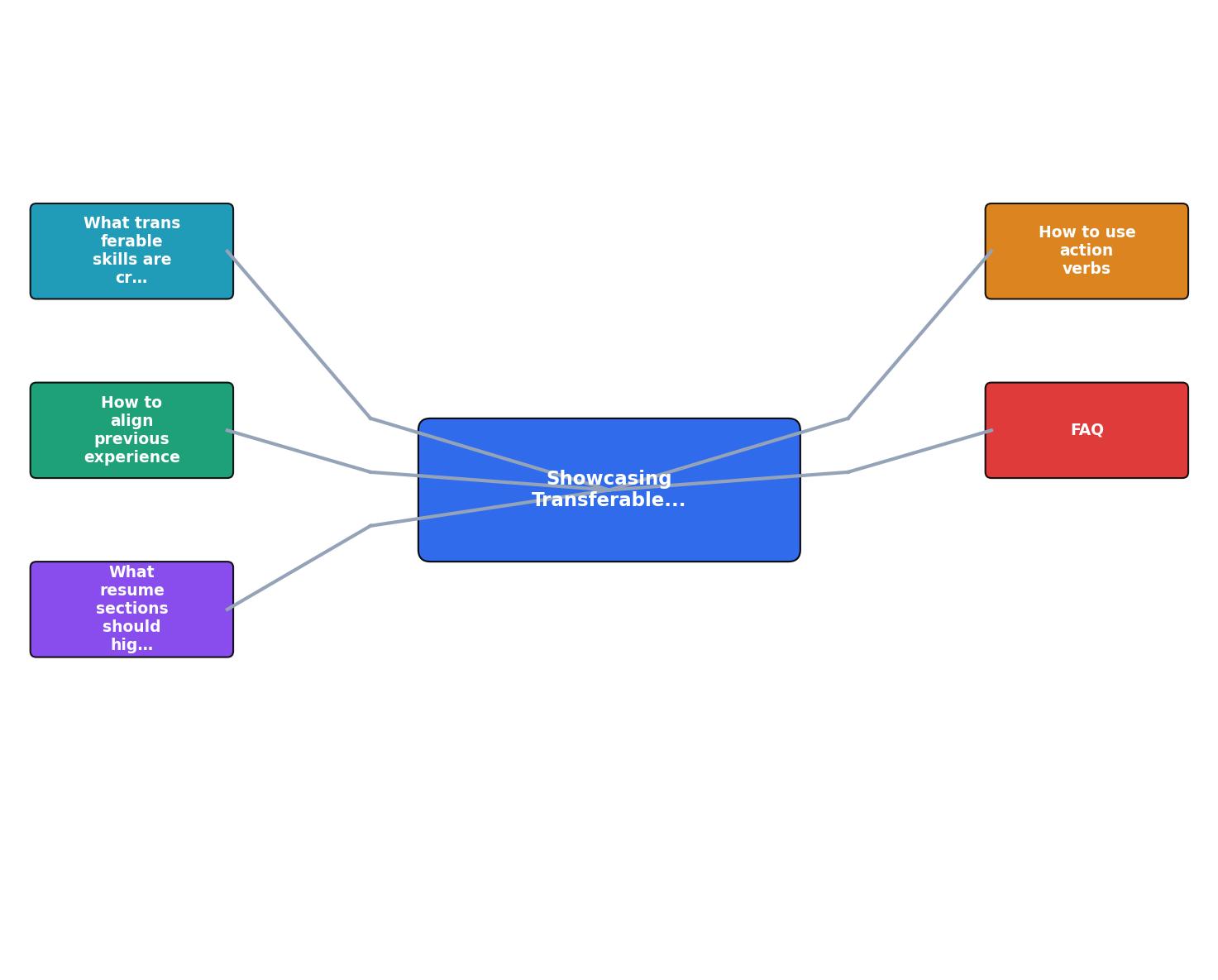
The diagram above shows the core steps: Identify Skills, Map to Marketing, Quantify Results, Rewrite Bullets, and Tailor to Job Post. Follow that sequence for every role on your resume.
Structure your resume for maximum impact

A career changer's resume needs a different structure than a traditional chronological layout. The goal is to lead with relevance, not with job titles that scream "different industry."
Professional summary first
Open with a 3-4 line professional summary that positions you as a marketing candidate. Skip the objective statement. Instead, state what you bring:
"Results-driven professional with 6 years of experience in stakeholder communication, data-driven decision making, and cross-functional project coordination. Transitioning into digital marketing with hands-on experience in content creation, audience analysis, and campaign performance tracking."
That summary does not mention your old job title. It speaks marketing language from the first line.
Skills section right below
Place a core competencies or skills section directly under the summary. Use two columns and include both hard and soft skills relevant to marketing:
- Content Strategy
- Google Analytics
- Social Media Management
- Email Marketing
- SEO Fundamentals
- A/B Testing
- CRM Platforms (HubSpot, Salesforce)
- Budget Management
Experience section with marketing framing
Each bullet under your work experience should follow this formula: Action verb + marketing-relevant task + measurable outcome.
Instead of:Responsible for managing team communications
- Developed and executed internal communication strategy for a 50-person department, increasing engagement metrics by 30%
Action verbs that sell your skills
Weak verbs make strong experience sound passive. Here are action verbs grouped by marketing function that career changers should use:
Content & Communication:- Authored, crafted, published, edited, produced, pitched
- Designed, launched, orchestrated, spearheaded, developed, implemented
- Analyzed, measured, tracked, optimized, forecasted, reported
- Coordinated, managed, directed, streamlined, executed, delivered
- Increased, generated, boosted, expanded, accelerated, improved
The following interactive card shows how a single experience bullet transforms when you apply the right action verb and marketing framing:
Sample resume sections
Here is what a career changer's resume sections look like when properly reframed for a marketing role. Use these as templates and swap in your own details.
Professional Summary:
"Strategic communicator with 5+ years of experience in audience engagement, content development, and data-driven reporting. Proven track record of increasing stakeholder satisfaction by 25% through targeted communication initiatives. Seeking to apply analytical and creative skills in a digital marketing coordinator role."
Core Competencies:
Content Marketing | SEO & SEM | Google Analytics | Social Media Strategy | Email Campaigns | A/B Testing | CRM Management | Cross-Functional Collaboration
- Launched quarterly newsletter reaching 3,000+ subscribers, achieving a 28% open rate
- Analyzed customer feedback data from 500+ survey responses to inform content strategy
- Coordinated 12 cross-departmental projects annually with budgets up to $50,000
Marketing Resume Transformation Checklist
Your progress is saved automatically in your browser.
FAQ
Frequently Asked Questions
What skill from your previous career are you finding hardest to translate into marketing language? Share it below, and let's figure out the right framing together.
Additional Resources
- Ultimate Guide to Transferable Skills for Resumes - Learn how to identify and showcase transferable skills on your resume to enhance your employability and adapt to changing job markets.
- How to Showcase Transferable Skills on a Resume - Showcasing transferable skills on a resume means highlighting abilities from past jobs or experiences—even those outside your target industry—that are ...
- 15 Transferable Skills That Work Across Industries - What Are Soft Skills vs. Transferable Skills? · 1. Collaboration and Teamwork · 2. Communication and Active Listening · 3. Creative Thinking · 4. Problem Solving · 5 ...

Get the 356 complete recruitment audit (free PDF)
Download the free PDF with 356 reasons hiring stalls, plus optional daily email tips. No credit card.
Get the free PDF 356 reasons · Free download